Showing posts with label story-telling. Show all posts

20 November 2025

Let Our Bloody Colours Wave


Aim

To create a medieval figure wargame that starts with the organisation, preparation and planning for battle that leads to the final decision on the battlefield.

All medieval armies were hastily thrown together. Any organisation and training of units and appointment of commanders must have been done after they had assembled. There were no recognised ranks, just the usual medieval ranks of King, Nobles and their servants.


Organising the army into their three wards would be an interesting debate - who to command who, which contingent to march next to another etc. There would have been incidents on the march - looting, fighting, arguments etc. - that would need to be addressed. The leader of the army would need to impress upon the men why they were fighting and why theirs was a just cause that God would favour.


Then there is the night before when planning for the next day of battle is very important.

Game Description

The game will be a multiplayer game that has five Acts. 


  1. Warriors for the Working Day

  2. Marching in the Painful Field

  3. The Royal Captain Walking

  4. Through the Foul Womb of Night

  5. Cry “Havoc,” and Let Slip the Dogs of War.


All players are on the same side - a better de. They are in effect comrades - though of course some are more equal than others - as the army leader will be a King or Duke, and the other leaders will be Dukes, Earls, Barons and assorted knights. They are effectively trying to win the war and also win their own victory conditions. Sometimes these might conflict.


We are but warriors for the working day;

Our gayness and our gilt are all besmirched

With rainy marching in the painful field.


Henry V - Act 4, scene 3

Act 1 - Warriors for the Working Day

The players are assigned the role of a Lord. This comes with the usual list of lands, estates, offices, wealth and also a short biography. The Lord will also have a list of friends and rivals etc. who will be in the same army. Each Lord will have a personal “retinue” of loyal retainers and servants, who act as their bodyguards, and will enhance status. Some Lords will have a Commander - a professional soldier servant - in their retinue Next a series are cards are dealt from the “hosts” pack. These represent the companies, groups and contingents of soldiers who have turned up. The Lords will then assign and organise these into three Wards. A Commander is an experienced professional soldier who will be able to advise their Lord.


  1. Cards

    1. Lords and their Retinues 

    2. Town, & City Contingents 

    3. Mercenary Bands 

    4. Professional Soldiers

  2. Form Special Units

    1. Mercenary Bands

    2. Artillery

    3. Scourers and Prickers

    4. Forlorn Hopes of Archers

    5. Men at Arms


  1. The player places the cards into their “battles”

    1. Three battles and a Reserve

    2. Special Units assigned to a Battle

    3. Commander of the Battle

      1. Subordinates

      2. Deputy

      3. Professional Soldiers

Act 2 - Marching in the Painful Field

Incidents that might occur on the march.  A fight and a murder. A quarrel over loot or baggage or a bar maid!


What do you resolve each problem? 


How do you control the men, organise the baggage, the food, looting etc?

Act 3 - The Royal Captain Walking 

What methods do the leaders use to raise the morale of the troops; to tell them that their cause is just and honourable?


  1. Masses

  2. Theatre

  3. Preaching

  4. Victuals 

  5. The Royal Captain Walking

Act 4 - Through the Foul Womb of Night

The planning for the battle on the night before. The field of battle is known or at least the terrain and some intelligence will be had on the enemy.


  1. Any last minute changes to the Battles and Leaders

  2. Any deployment of the Special Units

  3. What is the battle plan

    1. Deployment on the field of war

    2. What signals and orders are pre-arranged


Act 5 - Cry “Havoc,” and Let Slip the Dogs of War.

The battle will require little intervention from the players. They will have a few decisions to take but might suffer from not being able to implement them.


  1. Deploy the Battles and the special forces (some might be secret)

  2. Some players might wish to now use another set of rules for a medieval wargame, integrating some of the factors from the campaign into the ruleset for the battle.


08 September 2018

Hill 70 - An Adventure Game

I designed this Interactive Fiction or Adventure Game as a summer project to learn how to use Twine and Sugarcube. I will teach a Game Design course at a Sixth Form College, from September 2018, and intend to use this software with the students.

The best way to teach something is to learn it first.

I used an old game design sketch I had made some years ago of a decision based card game idea. It lent itself to this Interactive Fiction or Adventure Game format.

Hill 70 - The Game

In this game you take on the role of Major Gause, an officer commanding a battalion of infantry in the Imperial German Army, in Lens, France, 25th September 1915.

You make decisions based on the problems the Major Gause encountered.

Your mission is to defend the German positions against a British and French assault.

One game should take 15 minutes.

Click here to play: Hill 70

Debugging & Testing

Several people have taken the trouble to test this game for bugs, spelling errors and errors in the storyline thread. Thanks to all for taking their time.

Review


22 March 2015

Confessions of a Civilized Umpire

I had an interesting and challenging role as one of the Control Umpires for the Alien teams in the megagame Watch the Skies 2.

I had enjoyable game, though one now served with a cold slice of guilt.
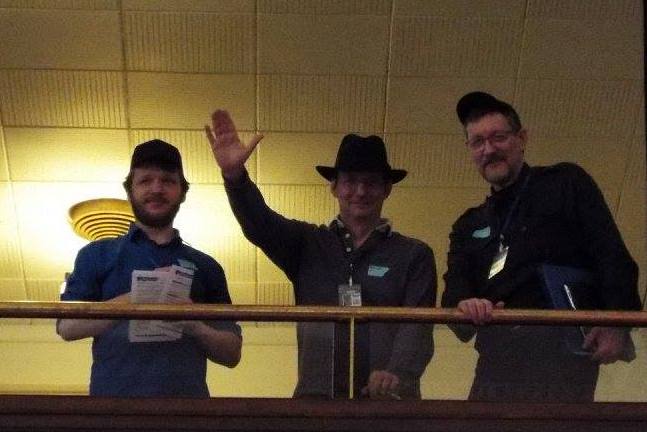
Half of the Alien Control Umpire Team, in their
balcony backwater. (L-R Jaap, Nick and Jon.)
After the game I had a post-game chat with Simon and Jerry, control umpires for the science game, and Paul, one of the African regional map control umpires. They had grinding games, with little respite, and little chance to get involved with the players other than driving the game at busy tables.

Also Paul asked me where the Alien Control team were, because we did not get down to the Regional Map Tables to liaise with them and collect and deliver messages.

So, I feel a little guilty that I had such a good game. And also I need to apologize to all the other Regional Map Control Umpires for our lack of liaising. Sorry guys.

So why was my game so different? In a nutshell I had a variety of thing things to do; some were even rules related, but most involved me using my judgement and what social skills I have.


Mentoring

The first duty of Megagame Control Umpires is to ensure that the players get a good game experience. Period! OK, we try to make consistent adjudications based on written rules, but we are really there to make sure that the players get a win from the experience.

And in WTS2 all the Umpires were very aware that we had many first time players. I think all the Alien players were first time players. That is a very high ratio. Most Megagames over the last few years have a cadre of returning veterans. These players are often cast as team leaders etc. and help initiate newbies through the rites of playing in a Megagame.

So during the setup and during the first turn I went from team to team and asked them if they had everything they required, if they had any questions, and could I help.

One team admitted they were very confused. So I told them that the start of megagames are usually like this though some of their problem were down to the fact that they were actually strangers in a strange land. I advised them to concentrate on scouting, intelligence gathering and even liaising with their "rival" teams. I also reminded them that all their actions had to be paid for in Activation Points (APs) and that they had a limited supply and a limited launch capacity. This started them off and after that they quickly learnt the ropes.

I was pleased to note that at the end of the game one of the players I had attempted to mentor did come up to me to thank me for helping him and his team out, and that he had had a great experience. Ahh... that pleases the twisted soul of an old grognard: enthusiastic young padawans.


Rules problems

After the first few turns the players settled in their roles, and had learnt the routine of each turn, and we left the to run their own internal games. This might be surprising to some people, but as Control we do not really see our role to check on the players. We just ask if they have any problems, we sort out problems and the game generally starts to run itself.

But there are problems. Most of the problems you have are those little pieces of grit that get swept up into the wheels of the game machine. For example during WTS2 players asked me the following questions:
  • The East Asian Regional Table Umpires did not give the alien players any "Human Specimen" cards after they had successfully played an abduction card? Was this correct?
  • I have just got a telepathy helmet. How can I use it to talk to Aliens?
  • How can I return this Cardinal to the planet in a shuttle and not get shot down?
  • How can we divert an asteroid's trajectory? One is about to hit Solaris C.

And this is why I like being an umpire. To resolve the above questions the Control Umpire has to role-play being a senior member of a player's staff, a civil servant, diplomat, scientist or military officer. The guidance for Control Umpires are explicit in this. The trick is not to give the solution, but to answer the questions put to you with a range of options, and to explain the risks, the advantages and disadvantages.


Lack of gaming materials

Some problems are more systemic. For example we had to guide the players through the rules for researching language and humanity. The rules were easily explained, but there was no game board to track the progress of such research. Now I think about it we should have drawn a track for them and plotted this. As it was on the day we asked the science players to come to the Umpires with their APs, and the requisite cards and keep their own track.

Another problem we had was that we ran out of models for PACs, and Shuttles and had to issue chits!


And then you have to make exciting decisions under pressure

The most challenging decision I had to make during the day was the proposed planetary bombardment by The New Republic (NR) team.

My main consideration was that I had to get this right as it was going to be a game changing action. Uptil then the aliens had abducted a few humans, but had not really done much damage. A planetary bombardment could destroy a large city and kill many millions of people.

The first thing I had to do was to remind them how this mission was done. A large capital spaceship enters into a low orbit and strafes the target. This might expose their ship to any space capable interceptors that humanity might have. It would definitely expose them to interception from other spaceships as the trajectory used to line up the strafe would be obvious to any nearby spaceships.

The problem I had as an umpire was that the tracking of fleets had been left to the High Politics game in the other room, which was on the opposite side of a large hall. I checked with Martin, the Control Umpire for the strategic space sub-game, what fleets were in the Solaris C solar system. I then made subtle inquiries with the High Politics teams about where their fleets were. I did not tell them why I was asking, and I asked about all of their fleets. I also asked them to give me the orders for each fleet. This took some time. Looking back on it it would have been great if there was a map with counters to track these things, but there wasn't and Martin and John were working hard to keep the game flowing for 15 players so they had not had the time to make one. Martin had tracked things with arrows on a map. But I wanted to hear from the High Command players what their orders were.

I was then able to tell the NR commander what ships might intervene if he carried on with his attack. This is information that would have easily been available to his staff, but the game system had caused the intelligence hard to find. The NR Commander had orders from his High Command to attack three locations: Rome, Rio de Janiero and Tokyo. I gave the NR player "on the ground" the information about the Imperial Fleet that could intervene. He made his deployment and was going to carry out his orders. I did give him an option to abort.

I then found the Imperial player "on the ground" and asked him some questions about his interstellar capability, what ships he had in the solar system, what bases he had and what was his posture. Again, general questions, but designed to get relevant information and not alert him to why I wanted to know.

I then warned both commanders that at the start of the next action phase I wanted them to report to me before they left for Solaris. Just winding them up really!

At the start of the next phase I gathered all the players round and brought the New Republican and Imperial Commanders to the front. I told all the players that there would be a delay in going down to the planet as we had an incident. I asked the Republican to repeat his orders. This was a nice bit of theatre. His orders were received with gasps, questions and cat calls from the assembled players. I clarified the dispositions of the Republican troops, writing them down on a piece of paper and gave a little explanation to the rest of the players about how the attack would be carried out. I then asked the Imperial player for his reaction and to be quick about it. He was quick and gave his deployment. I gave both players a last chance to avoid combat - this is almost always a possibility in space battles. Both would not stop.

The combat was quite simple, and I was ably assisted by Jon, another Umpire who had turned to right section of the rules and read out the results to each round of combat.

The outcome was that of the three straffing runs, the run on Rome was a draw, all craft on both sides were destroyed or seriously damaged, the attack on Rio ended in defeat of the Republican ship and the Tokyo run was unopposed. Tokyo was destroyed, killing about 10 million people.

This little battle was watched by all alien players (in the Solaris C solar system).

I then told Jim about the outcome of this action and went with him to the East Asia map and watched him implement the outcome. I had previously alerted Jim to the fact that one of the Alien teams were considering this attack, enabling me to get advice from him about the action and warning him of what was in the offing. I then went to the relevant maps - Americas and Europe - to tell the umpires that astronomers and some military installations would have noticed strange bursts of energy and explosions. And then some fragments would fall from space to the planet.


Player feedback

As usual with megagames we do not have a last turn, we merely announce towards the end of a one turn that this is the last turn. Game over. In a good game, the players are disappointed and want to enact their next turns plans, or to make that last rejoinder to the previous speech etc.

I was privileged enough in this game to be the umpire who announced the end of the game to two groups of players. All were disappointed and wanted to continue. One group, which consisted of the Senior Aliens and the UN Council (abducted earlier!) wanted their "last word" and kept on for a couple of minutes making their final points even though they knew the game was over.

That, I think, is a definition of an immersive and enjoyable game.

This makes Control Umpires around the world happy.


30 January 2015

A Story-Telling Game: Until we Sink

I have played my first "story-telling game," Until We Sink.

Which begs the first question, what is a story-stelling game?

Is it a role-playing game, is it a matrix game, or is it improv acting?

Well my first response is to note that "Until We Sink" is unlike any game I have ever played before.

I suspect that is it more like a murder mystery game, except that the scenario is open ended. A story-telling game does not provide a murder and a murderer, or secrets for each player. It just starts off a scenario and asks the players to explain the occurrences in a story that they collaborate in telling.

There is a structure to these game, there were some mechanisms, but there is no method to determine the outcome of our play except through talking.

To put it crudely there was no dice rolling or coin tossing or paper, stones, scissors means to resolve conflict or outcomes.

We just talked and created a story that all could agree was consistent and then we could move on.

Game Structure

The structure of the game:
  • each player has a character to role-play
  • there is a story background and an environment - this is provided as a text to be read out
  • the game is divided into turns, each turn being a day
  • each day, a new event occurs - a card is randomly drawn from a stack of event cards
  • the players can only interact at the end of each day on a verandah where we discuss the days events
  • the day (turn) ends when at least two players leave the verandah
  • the last day of the game starts when a particular event occurs
  • the game can only end when we find an agreed explanation or story for each of the events of the previous days 

Characters

Each player takes on a character from a set of character cards provided by the game.

Each character has a basic description about the person, and we are encouraged to colour and flesh this out with, a name, age, nationality, and character traits.

An example of a character card.


                     Eternal Backpacker (guest)

You have circled the globe, and ended up on this island

You are a free thinker, independent and a little shabby

You like to point out how square the other characters are


Events

And that is about it. Apart from the event cards that are played each day.

The players then have to explain the new event, in the context of the whole story.

Example of an Event Card


                A theft of underwear.

One of the character's underwear disappears.

All the players roll dice.

The one with the lower roll is one change
of underwear short.

If more than one player rolls low, those
players should reroll.


Game Play

I will not give a blow by blow account of the game. Suffice it to say, we all had a lot of fun, laughs, funny accents and bizarre incidents, and consumed a couple of bottles of red wine.

My favourite story was how we resolved the above event card - theft of underwear. The manageress of the hotel owned up to stealing the one pair of underpants (boxers) that the South African eternal backpacker owned as she needed a flag for her healing ceremony. His boxers - only kept for best - had the South African flag printed on them.

Game Critique

My intention in running the game was to explore a game format unfamiliar to me, that was very light on rules and mechanisms, and was thus accessible to inexperienced players. I wondered if this game format could be usefully applied to a learning game for use in school rooms or other training situations.

All agreed it was fun. All agreed it was entertaining. I think the inexperienced players were a little worried about the requirements of an unscripted, loosely structured role play but they all grew into it and found it easier as the game progressed.

As for its potential as a learning game, I don't think it we could easily see an application. One person thought that children would find it difficult to "join" in and worry about "loosing their cool." I thought having one or two experienced role-players would help overcome this.

Another person thought that the learning aims of any game would have to be more tightly scripted. That each character would be given a secret or a skill that would link to an event card and that the event cards should be ordered to create a desired story.

One thought I had was that there was very little the players could do to influence events. We could not decide to act and then see the results of our actions. I had proposed a learning game scenario about a cyber warfare or cyber security. In this scenario the players would need to know if their actions, had stopped or prevented some incident. This sort of scenario would require a game director, or dungeon master or a facilitator. And then we are back to a matrix game, or a facilitated role-playing game.

We all agreed that it would be a great activity for a drama group, a English literature class exploring narrative, or an English language class.

In conclusion: I think the lightness of the game structure has a lot to commend this sort of game; quick to pick up, easy to play. I would suggest that if your teaching aim was not about acting or narration, it would have to be more tightly scripted and a facilitator added, even if they just act as prompt to nudge the play back to the learning aim objective.

Thanks

Thanks to Nicki, Polly, Seth and Stuart for making this an excellent evening's entertainment and for contributing and staying a bit longer to add their criticisms of the game. And for travelling into central London from the suburbs.

Popular posts