Showing posts with label megagames. Show all posts

01 December 2019

The Mid-Turn Slump in Megagames

Many players experience a mid-game slump in Megagames. These multiplayer, all day games are a bit of an endurance test. There are no breaks in the game for lunch or comfort, the game inexorably goes on. Players spend their time talking - a lot - thinking and sometimes moving pieces on the board. The megagames typically start at 09:30 and end sometime about 16:00 - 17:00.

The mid-game slump is usually experienced at 14:00, give or take an hour or so. Players report that the gameplay lags or that they have nothing of note to do, that they are tired and need to sit down, some go outside and have a smokers break, some go outside just to get fresh-air and some "me" time.

What are the causes of the mid-game slump?

  1. Learning the game. The first few turns everyone is learning how to play the game. We are excited and totally engaged not just with the narrative but with the requirement of learning the rules by playing them. Later in the game we have learnt the rules and only the game narrative / plot remains to engage us.
  2. Snacking. Do not discount the poor diet megagamers eat during the game. We bring lots of sweets, chocolate, cake and crisps. Really bad for endurance.
  3. Easy early problems. All the early targets have been achieved. The NPC baddies have been subdued / conquered.
  4. Stalemate. By the mid game most people have aligned to be on oneside or the other, lines have been drawn on maps / tables. Players might have tasted an early defeat in an unadvised battle and now everyone sits in big stacks and watches the other.
  5. Minor Players. The players who are totally engaged in the game seek each other out - usually in conversations, not mechanical game play, and the ones less engaged crank the mechanical game play handle and usually gossip rather than engage in game related conversations.

How the designer can address these issues? 


(5) Minor Players

This last point is the one the game designer can influence the most. Don't make minor player roles. As someone put in the Anerley Arms last night, don't give a brief that says "be loyal to", or "follow x". 

This will mean that some settings have to be handled with care - I suggest that Medieval scenarios have this issue - you have a king, some dukes and the rest are minor lords.

Choose your scenarios with care

My advice here is to choose your scenarios with care. One of my first actions when planning a game is draw up a list of player roles. If the player list has lots of minor players re-think the scenario you want to do. Should it be more political? Should it be more mechanical? Should it be a smaller game? Don't be pushed into accepting more players than your game can accept. I have heard this is a pressure some designers encounter.

I will not re-run my two megagames "Shameless and Impudent Lords" again as I first did designed them. I will eliminate minor Lords. To do this I have to either run a very small game of about 10 to 20 players and control or to make real teams.

Real Teams

What do I mean by a "real team"? I suggest that you physically arrange a team so that the players sit together, drink tea together and break bread together. There is a saying in megagames called "table teams" - this is when a group of players after several turns adopt a group think despite their briefings! This has occurred because of social pressures not because of their briefings. Use this to your advantage by arranging your players with team time and team tables. If you can afford it have team controls too.

Be loyal to

Avoid player briefs that advise the player should just be "loyal to" or "always support x". 

This advice might seem contradictory. I am advising have "real teams", but don't write briefs that say be loyal to. How can you achieve that?

I would suggest that when you form teams, give all the players on that team the same objective. Tell them they want their "faction" or their "unit" to achieve this. So give the team an objective. Then sit the players together and hopefully social pressures will bond the team. Also give them an intra-team rival or enemy. You don't like those Greeks, you are a proud Macedonian.

This will not work with all players and this is where the designer plays their trump card - casting. Make sure you cast players you know - or you know their reputation - are team players or followers of briefs. Put mavericks and conflict queens into those quirky roles. Casting is your friend.

(3) Easy early problems 

This has to be handled with care. 

A simple suggestion would be to add more events that will occur later in the game. To give a map control several cards to generate issues / problems etc. The problem with this is that it is artificial, and runs the risk of being seen as being artificial and imposed on the game. For me the great joy of megagames is that players generate their own issues and problems, and solutions - they own their narrative, they are invested in the game and they know why they do what they do. 

Probably a better suggestion is to make the early problems difficult to solve but not instantly deadly to the players. So early problems have to be hard to beat, and passive.

I remember play testing with Reiner Knizia and his mantra was he wanted to give the players two things they wanted to do, but only the possibility of doing one of them. So you have to restrict the resources they can deploy so they can only do a one or possibly two things. Maybe restrict the number of actions they can do per turn. Perhaps allow unchallenged NPCs to grow and spread if nothing is done about them. 

To solve the problem players need to learn how to work within the rules. So these early problems are like tutorials in computer games. Maybe they should learn how to collaborate with their fellow players to beat up an NPC. They might need to pool resources - treasure, blood and time - to solve a problem.

(4) Stalemate

This is a difficult problem and I think it is mostly related to the scenario used in the game. 

The obvious stalemate scenario is trench warfare in world war 1. If players sign up for this sort of game they come prepared for a slogging attritional game. The problem arises when the game scenario promises wheeling and dealing and delivers "big-stack standoffs". Players thought they were going to have an effect on the game but find they are at the bottom of the hierarchy doing the bidding of their master.

The answer to this is again structure. Ensure the solutions to the problems in your game cannot be easily solved with big stacks - unless that is how the historical scenario went. If you have to have big stacks, go for real teams. If the scenario enables you then distribute the tasks to several players who have to move to other regions / tables and will be gone for several turns.

But this is a difficult problem.

(2) Snacking

Everyone has their own pet theories about dieting and food. One suggestion I would make is that many people get dehydrated without knowing it. Perhaps you could provide free bottles of water on each table as well as a well stocked and friendly canteen.


(1) Learning the game

There is no easy answer to this. The known responses are to have a longer than usual first turn and to have an initial setup that requires a battle or conflict to be resolved so that all players can observe the walk through.

19 August 2019

You know you are playing in a Megagame when...

I present this as conceptual tool to enable the befuddled masses to know if the game they are playing really is a proper megagame.

These tools do not require any definition and even a social media debate. You just need to ask yourself a few "yes" or "no" questions, and if enough of them are yes then you can be mostly certain you are indeed "playing in a megagame".


1. Are there a lot of players?

We might need to nail down "a lot of players" but really megagames involve more players than say a wedding, or a family party, but much less than a football crowd. But in general many more players are playing in one game at the same time than anything you have every experienced. Megagames are quite the biggest multiplayer games you will every play in.

Perhaps I should define what I mean multiplayer. I suppose this could get tricky, but if I said there have to be more than 2 players this will eliminate games like Chess, and most SPI boardgames. (There is a whole debate about if megagames are really just big boardgames, I just prefer to say there are a lot more players in a megagames than the typical boardgame.) 

However I think I can stick my neck out and say that if there are more than 25 players (I include Control in this too) then it is more likely to be a megagame than another type of game. 


2. Do some of the players refer to themselves as "Control"?

All megagames have a proportion of the players who call themselves Control. The Designer has taken a lot of time over "the ratio". The ratio, in this context, refers to how many Players there are to Control. Some like a low ratio, others like a high ratio. There is something of a debate about this. However, for our purposes - finding out if we are playing a megagame - just knowing that there are Control will suffice.

Control like to consider themselves as wise, self-sacrificing, and very worthy. This is mostly true. However they don't like to admit that they are really playing in a megagame. Don't be fooled, they are playing really, its just that they pay less and still feel morally superior.


3. Are there any breaks in play?

This can be quite difficult. For example when I play boardgames - like Puerto Rico, Carcassone or Settlers of Catan - my game group frequently has breaks in play. We generally forget about the game and throw insults at each other, go to the toilet or just chat shit about irrelevant things.

Now all the above things also occur in megagames, but they usually happen - apart from the toilet breaks -  and the megagame does not just stop! If a player indulges in a tea break, the game keeps going - though some argue that the tea queue is a great place to talk to players you shouldn't otherwise talk to. If you live vlog yourself, the game goes on. There are no breaks in megagames! This is quite a distinguishing feature.


4. Are there any ad hoc rulings?

This is very simple. If you play a game like Chess, or Settlers of Catan, there are occasionally disputes about the interpretation of rules. In non-megagames these are eventually settled by player consensus (or sometimes just throwing the board over and storming off). In megagames any disputes about the rules are taken to "Control" who quickly, and usually with no attempt to check the rules, tell you what the rule "really" means and to do that, and that you are just trying to "get away with it" and not to try it on again, and don't go and ask another Control for a second ruling, and just suck it up and get on with it.

Sometimes in really serious ad hoc rulings, the Control will secretly talk to the Game Designer and then there will be a quiet promulgation amongst the other Controls of what the Designer really intended by that rule. It's all a little confusing, and very ad hoc!


5. Are there any inconsistent applications of rules, from table to table or from Control to Control?

If this does not happen or if players don't whinge about "damned inconsistent rules "you know you are not in a megagame. Simples. Experienced megagame players expect inconsistent rules; they even take great joy in pointing them out to other players and control, sometimes during the game, but more often afterwards in some blog or vlog or social media post.

Some are a little disgruntled by this, others are more phlegmatic. But you cannot deny that it is part of one of the defining features of a megagame - inconsistent application of the rules.


6. Does emergent play occur?

Most players are not sure what emergent play is; its a little bit theoretical. In simple terms it's when something happens within the structure of the game that was not anticipated by the designer. By structure I mean the rules, the maps, the counters etc. I don't mean player behaviour, players are just downright unpredictable. A wise and experienced Game Designer will often mutter about "emergent play"; it makes them seem more in control if they expected the unexpected.

Anyway that's the theory. In a megagame you usually meet emergent play when a player or Control says they are "doing a wizard wheeze". I would go so far to say that if you do not encounter this at least once then you are not in a real megagame.


7. Are there rules about where the players can and cannot be?

Think about it. In most games the rules do not tell you that for 10 minutes you have to sit with a group of other gamers or that only a certain type of player can go to the map table etc. OK, in some boardgames there is an order of play thing going on, which more a seating order thing.

Anyway, you know when you are playing in a megagame if somewhere in the rules there is a section that stipulates where the players have to be at certain times or cannot be at other times. OK, games like Rugby Union have extremely complex offside rules which might be mistaken for megagame rules about player placement, but in Rugby the rules on cover temporary incidents. Megagame Offside rules have rules that require players to be present for regular recurring periods of times, so they're not much like Rugby Union offside rules.


8. Are the players organised into teams by the designer pre-game?

Let's face it why else would you be required to sit at the same table with a bunch of strangers if you weren't in a team. Megagame Designers reckon they can cast a bunch of strangers as a team to create that great megagame narrative experience. How many other games does such "casting" take place. Yes casting is central to films and theatre, in fact I think this is why some people like to think megagames are a sort of improv theatre for gamers, and there might be something in that.


9. Do some of the players dress up?

This is probably the most controversial thing I'm going to say. Perhaps it's because I played my first megagame in 1991 and count myself as a bit of an old grognard, but I remember the days when no megagamers dressed up or even wore hats.

These days, if somebody is not wearing something swashy or buckling then it's not really a megagame. But a good point is that many players don't dress up; perhaps this is how you can distinguish between megagames and theatre - in theatre all the cast dresses up, in megagames only a few really enthusiastic types do.


Conclusion

I hope this simple conceptual tool will be of use to all gamers who might be a little concerned that they might or might not be playing in a real megagame. Just ask and answer the above 9 questions and I would suggest that if you get 9 affirmatives, then you are playing in a megagame. If you get between 6 - 8 then it's probably just a messy gaming experience, like a club game at CLWG, which is not really here nor there. Less than 6 then I would suggest you should think about asking for your money back, as it is almost certainly not a megagame.


Final word

Actually.... this all started as a serious attempt to define a megagame by writing a set of necessary conditions. Yeah! I bet you wouldn't have read an article about fuzzy sets and crisp sets - well I know at least one person who would - but they've left the country now, so I'm safe.

I have a few other conditions - that upon further reflection - are less likely to always be found in a megagame but quite likely to occur... A simple list will suffice.

  • Roleplaying
  • Hierarchical teams
  • Friction between players
  • Players have personal roles
  • Player interaction drives the gameplay

10. Reading the rules

There is, of course, the final and very cynical definition of a megagame - you know when you are playing in a megagame when most of the players have not read the rules, sometimes, even Control haven't!


15 February 2019

Consistency in Megagames

In a recent megagame I noticed that one of the "new" players was looking rather tired and despondent towards the later part of the game. I spoke to them "out of character" as I was surprised they were just nodding through decisions their historic character would oppose.

The "new" player told me about the inconsistent control decisions he had experienced and how this had "broken" the game for him.

And I thought of the discussions I had had with the Parry brothers and others about poor Control consistency. As a veteran of over 50 megagames, mostly as Control, I have learnt to cope and work around or with inconsistent "control decisions." I would rather it didn't happen, but it usually doesn't kill my game as I am invested in keeping the game and the experience going more than I am in adhering to a set of rules. But... when I see the frustration and lack of involvement through the eyes of a noob I start to wonder.

There must be a better way

I'd like to suggest a few things that could help bring consistency to a game.

Training Control 

In some games there is a long first turn or a quiet first turn where the players have to plan before the main operational phase starts.

This should be a great time for the Game Control or even the Map Controllers to get together and work through any issues they have with the rules, and even play a few combats or moves out. Issues will be dealt with, Control will have some practice and I don't think this will delay the game start much.

It might even be a good idea to embed Map Control training into all megagames!

Map Controls or Liaison Controls

One of the obvious choices for a designer is how and where you deploy your Control. These days we go for Control-lite games and for the rules to be embedded on the cards or the playing pieces used by the players and have open games where eventually Control can just push the players through the phases and make judgement calls in unseen or ambiguous circumstances. 

This usually means the designer goes for "Map Controls". I would argue that this is where some of the inconsistency will occur. You have hard-pressed Map Controls working either as a pair or on their own running a map. Differences in rules interpretation are bound to occur and will not be easily spotted.

In addition most games have one map that gets busier than the rest and Game Control has to step in a reassign a Control to assist. This overwork of Map Controls is a common problem.

My suggestion is that perhaps the designer - especially in games with big teams - should go to the older standard of Liaison Controls. For those not familiar with Liaison Controls, they collect orders from a team or teams, take them to the operational map and with other Liaison Controls process the orders and communicate the results to the player teams.

Of course there are trade-offs here. Liaison Control requires a lot more people. Also it means there is a lull in the game whilst the players wait for the turn to be processed. But as someone who has experience as a Map Control and a Liaison Control, I know that the Liaison Control are more consistent as rules interpretations are discussed and decided upon as they occur, often with the Game Control or Senior Map Control involved.


24 October 2017

New Players in Megagames

My intention is to write up my experiences in playing with new players in megagames.

New players are a great asset to megagames. Without them the genre would stagnate. They bring fresh ideas and enthusiasm that has driven the recent global expansion of megagames.

But I do worry that new players have a lot to learn in what is often a very confusing and fast moving event. Experienced gamers are aware of this and we do try to take the time to assist. But... it is a fast moving and confusing event


Red Dawn

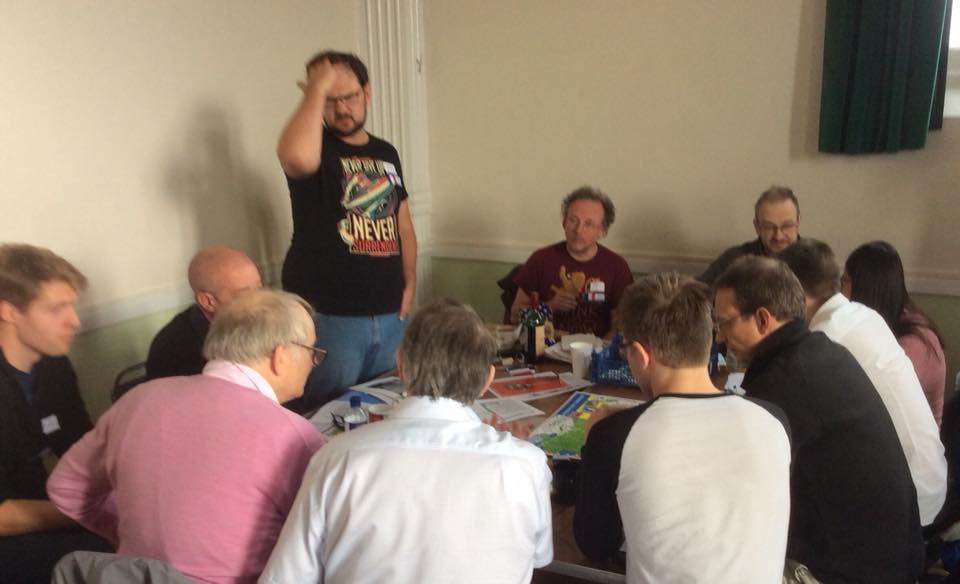
The Blue Interventionists-without-intervening team.
In the recent game I played in - Red Dawn - I was on a team that consisted of four players playing their first ever game, one player on their second game, three players who have played at least five megagames and two players who have played in too many games to mention in polite company, one of them being myself. The umpire was the most experienced of all of us.


Game Play and the inexperienced.

In Red Dawn - I was in a team of two, the Japanese Interventionists, attempting to defeat the Bolshevik menace and cooperate with my fellow Allies, the British, French and USA teams. 

In my team was Bob [not his real name] who was a new player to megagames. Bob made an excellent start. He had read the rules, and was able to find relevant passages on his tablet. We checked our understanding of the game aims and how we might achieve them. After that we quickly settled down into our roles, he as the operational player and I as the diplomatic player.  

During the game I mostly let Bob get on with his game. I noticed that after the initial chat he needed no guidance from me. For example: he quickly understood that though the diplomacy phase might take longer than it should, he should go to the map and get on with the next operational move when the phase had started.

There were a couple of issues I want to illustrate and discuss; issues that relate to Bob's inexperience with megagames.


1. Drag your feet

The arrival of the Japanese army units came at an opportune point for the Japanese. We were the last fresh and substantial force to be deployed. The theatre for our deployment was Siberia. There was no dispute or debate that the Japanese should be deployed to Siberia. All the other Allies had to support the move even though they knew the Japanese had their imperialist eyes on that part of the world. My comrade Allies made it plain that they expected the Japanese to clear all Reds from Siberia. So I agreed to this caveat to their support and ensured that Bob heard this too as I passed him his shiny new units.

Later on the next turn, I visited the Siberian map and checked in with Bob. He happily showed me his units had disembarked in Vladivostock and were moving to the front.  I told him we wanted to hang on to Vladivostock and its hinterland. So I wanted him to move only half his force to the hand-over point with the French Theatre Commander, and I wanted them to move slowly, not at best speed, to find reasons for being delayed, lack of trains, lack of railway staff, lack of food etc. I told him that I didn't want the Japanese to die for the Allied cause. I told him to drag his feet.

Up until then, I think Bob, had been happily playing his game, maximising his troops deployments, making his logistics work efficiently and generally being a good operational commander. And there was I telling him to go slowly, only commit half his forces and not be an effective commander. In other words, think of his side's real aims and ambitions. And remember the dictum: War is the continuation of politics by other means. This is why I like megagames so much. Players new to megagames might have heard of this dictum, but they'd never really understood it. Not until they played a megagame. I remember learning it myself in my early megagames. I hope new players learn this lesson too.


2. How're you doin'?

About two turns later I visited the map again, and this time had a chat with the Whites, the Cossacks and the Reds - yes I know, I talked to the enemy! I kept the chat straightforward and jolly, a bit of banter really, "how's it going", "your forces look a but done in", "now's the chance to swap sides" etc. But of course, I was really gathering Intelligence.


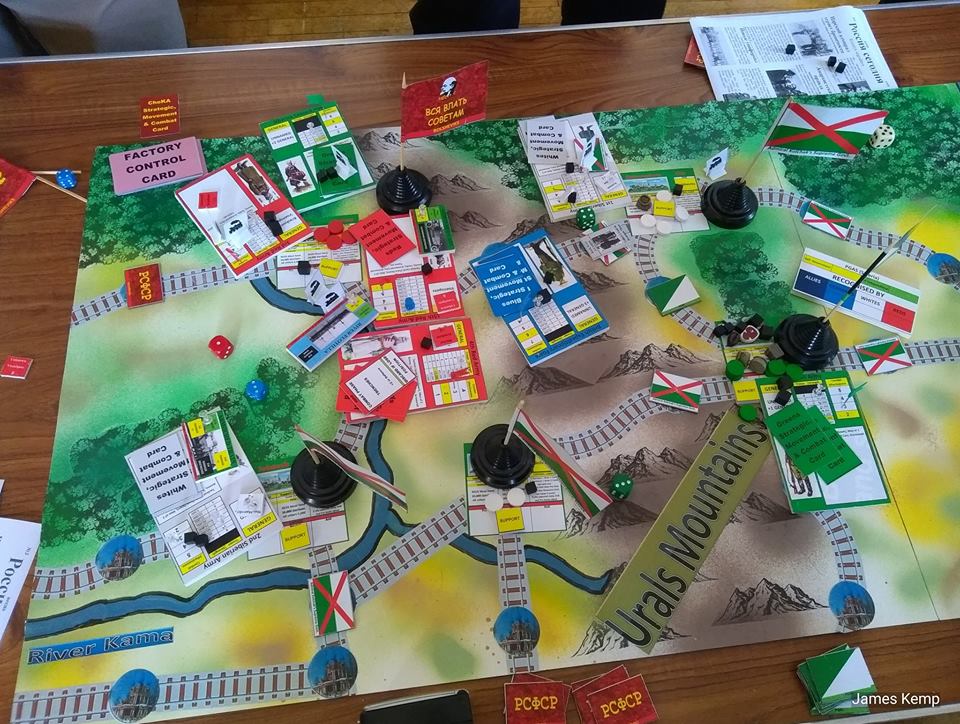
The small corner of Siberia that would
keep the Red Flag flying here
The Reds told me that they were relieved to still be on the map and that their game aim was to keep the red flag flying in the last corner of Siberia. They sounded confident. I also noted they did not refer to the next map and how they might be receiving reinforcements. My chat with the Whites involved references to alcohol, loot and their confidence in reaching Moscow. In other words the usual White bluster and lack of real direction. In my chat with the Siberian Cossacks, I was told that they were going to win, but it would take a few more turns, and they were confident this. As I was leaving they mentioned that they could do with some more food and ammo, just to be sure they would win! I said I would see what I could do.

I checked the next map, which was Russia west of the Urals, and noticed stacks and stacks of Red armies recruiting, reorganising and no doubt being fed into other Theatres, including Siberia.

My assessment was that even if I committed the Japanese forces whole-heartedly we were just going to get chewed up. The Red menace had been contained at best but looked united and centralised as opposed to the disparate groupings of Whites, Greens, and Blues fighting them. The fighting should be left to the locals with logistical support from us. Any further involvement of my forces might mean I would not get to seize Siberia and Vladivostock in any strength.

I checked with Bob about his view of the map and he didn't really seem to have a picture like I had. He told me about the deployment of our units and what he had seen of the fighting, but not what was in the minds of the commanders. I told him what I had found out from chatting to the players and asked if he could afford to spare some supplies for the Cossacks. We had earlier promoted their self-rule and got it recognised by the Allies. I had judged them too difficult to fight and they would form a useful pool of mercenaries and guard dogs for later Japanese Imperial expansion in the area. Getting them on-side, supplying them, whilst getting them to do the dying, meant they would owe me a favour and weaken themselves too.

The lesson here is to talk to the players. New players might be nervous talking to new players, they might be unsure of the etiquette, and not sure of the game mechanic. I was confident that in an open map game with turns a season long, my character would be able to receive and digest a lot of intelligence reports and attend a lot of cocktail parties that would give them a good picture of what was on the ground and in the mind of the opposition. The game would've been designed differently if this was not possible. 

Megagames are mostly conversational games with a few mechanics that pin down some of the game facts. 

Learning to talk to other players is an essential part of playing megagames, even for operational / map based players, though to a lesser extent than the politicos.


Conclusion

My conclusion is that megagames have been for me a great learning experience. I have learnt lessons about the complex nature of operational warfare, the never absent influence of politics and how to work and cope with a stressful human activity that involves more than a half-dozen people. 

Some would suggest that megagames only teach you how to play megagames; and they have a point. Games are not simulations or models, they are games. But I like to think my megagaming experience has enhanced my understanding of history and my experience of working in a team.

Perhaps this goes someway to tackle the allegation that some players make that megagames should have more structure, less ambiguity, more precision in handling rules interpretations and Control adjudications. My suggestion is that megagames are not about giving you a structured gaming experience; sometimes you will experience inconsistencies. This might spoil your game if your world-view is that games should not do this. The golden circle of the gaming experience can be a place to experience consistency and adherence to rules. Which is all the more apparent because the world is not like this.

And this is my point. I hope that players new to megagames gain a playing experience that enhances their appreciation of the real world of politics and warfare, in the contemporary world and in history. And have some fun along the way.


05 July 2017

Confessions of a MegaGame Control - Knowing when to say no

This is part of a series of reflective posts I am writing about my experience as a Game Control in a Megagame*.


Knowing when to say no

This incident demonstrates the problems that can arise when a Game Control is making ad-hoc decisions and loses sight of the the larger picture. 

It is also an illustration of how Game Control will err on the side of caution especially when a player's actions will kill, kidnap or disable another player's character directly. Unless of course it is all part of the plan. I know this because I was once subjected to an attempted poisoning and then later successfully assassinated in a megagame, and this was well within the game designer's expectations.


Survivalists and the Feds


Image may contain: 3 people, people smiling, people standing
Three of the Survivalist Militia Players.
They don't get on very well. A bunch a freedom or death, gun totting, whiskey swigging backwoods country hicks don't like the Feds. They are to blame for most of the things wrong in the world today and they have a very long proclomation on the web that says so and lists all their grievances.

I had become the de facto control for the survivalist team who were very adept at creating schemes outside the usual game processes.


The plan

Juan, was the leader of the Well Ordered Militia (WOM). He told me that he had been in email and phone conversation with the player playing the Secretary of State. These conversations had been initiated after Juan had managed to attract his attention after he had released his Wanna B3 ransomware virus that nearly took down the nation's banks.

Juan's plan was to get the Secretary of State into a room with one of his men and explode a suicide bomb.

So several alarm bells should be ringing for any experienced Controls.
  1. A player attempting to kill another player - and not really part of the overall story arc of the game designer.
  2. A member of the Well Ordered Militia was willing - according to Juan - to be a suicide bomber.
  3. It would mean organising the movement of two players across many maps to actually meet.
  4. There would be a stand-off which are generally very hard to control and adjudicate.
  5. If successful his little group would probably be squished by the Feds. Thus diverting their resources from the main game effort, counter to the game story arc.
  6. Did his group have the knowledge to setup a suicide vest.

How to deal with difficult, game changing actions

Image may contain: 5 people, people smiling, people standing, shoes, suit and indoor
Madame President and her Cabinet
My attitude is never to say "no, it's impossible". And also rarely say "yes, that's easy, just do it." As Control I want the players to have a good gaming experience. In fact that is the most important reason we work as Control: our priority is the gaming experience of the players. 

My first reaction was to ask why he was going to do this. Juan pointed to his brief which did actually say he was to do all things he could to attack or disrupt the Feds. So it was part of the main story arc.

I then asked how he knew he had a "volunteer" to do the suicide mission. He admitted he had no card or reason, just a hunch one would volunteer. I would not accept this. One real world thing I notice is that right-wing militias seldom select suicide as an operational tactic. I wanted a special event card to allow this - a game rule - to prove he had a volunteer. Juan didn't so he went away for a bit to think about this.

His next plan was that he was going to do it himself. OK! I am not worried about a player exercising agency over their characters. Though I was worried by this radical exercise of player agency.

So then I started pick at the details of making the vest, organising the meeting etc. And eventually I think Juan realised that the suicide thing was not going to work. The Feds would have too much security, his skill base was not sufficient to hack together a suicide vest etc. So Juan then moved to kidnapping instead, a more likely proposition, though still a very difficult one. Juan hammered out his plan. 

At this point I decided I needed to talk to more people.


Talking to others about wizard wheezes is a good thing.

No automatic alt text available.A big part of megagames is ensuring there is good information flow. This is not just the players. In fact the players information flow and blockages are usually well chartered by the designer and mechanisms are in place to enable or disable the flow of game information. The problem is that Control has to flow crucial information between Control. Sometimes this fails - see my post on my failure as a logistics control in a megagame. Controls have to think carefully about ad-hoc decisions. They sometimes affect other parts of the game remote from themselves and sometimes they need to let other Control know something out of the ordinary is going to happen. The Press and Media players often assist this game flow, but they cannot be relied on and of course Control actually knows what really happened. 

So the first person I wanted to talk to was the player playing the Secretary of Defence. It just wanted to confirm he knew about this militia leader and if he knew of a proposed meeting. I spoke to him and checked this.

I couldn't find the Federal Team Control, so I went back to Juan. Luckily I noticed Jim walking past. So I asked if he could hear out this scheme. At this point, I would have probably asked any other Political Control, or Game Control nearby to hear out this plan. I was worried about.

Jim heard out the plan and quickly stopped it. Jim said no it would be unfair for any State based player in the London game to physically meet up with a Federal player. The Federal team players were kept in a separate room in London and were only supposed to interact via email or phone with the 12 other megagames around the world. Just because Juan was in London would be unjust to the other remote games and their players.

At this point I realised I had forgotten about the wider picture. I had gotten so much into the details of the plan that I lost track of the primary concern of the overall game. 


You learn from your mistakes

I put this example up here as a lesson. If in doubt, prioritise the requirements of the larger game over the concerns of one player. Do it tactfully, but do it and be prepared to explain why.

In my defence I think I was distracted by the many difficult things in this plan. I was very sure it was going to fail, and only clever thinking and a big dollop of luck would successfully implment the plan. So I got involved in the detail in an attempt to dissuade the player. Maybe I should have said "it's not very likely to succeed for these reasons" earlier.


----

*Urban Nightmare: State of Chaos 

I recently was a Control in a Wide Area Megagame. I would suggest that those who do not know what a Megagame is visit this site - What is a Megagame?


23 March 2015

The cracks between tables: Moving the narrative between teams in megagames

I have another confession to make as an Control Umpire for Megagames.

This is similar to the Rubber Failure I wrote about earlier. This time I want to talk about a failure, why it happened, why Megagames are more prone to this particular problem and how it could be solved and the problems with the solutions.


The fail

In the Megagame Watch The Skies 2 (WTS2), there was a problem of an asteroid that was predicted to be about to hit earth with the potential for ending all life on the planet.

I was the Control Umpire for the Alien Expeditionary teams. One of my teams came to me and said they had heard about this asteroid from a human government and wanted to help by averting this disaster.

We talked the various solutions through - this was me as an umpire role-playing their various scientists and technicians on the players' staffs. The team decided which solution they wanted to do, they paid the cost and the asteroid was diverted onto a new course that would take it harmlessly past earth and into the sun. I charged them four Activation Points to do this. This was half the cost of creating a moon base for them. The cost was mostly in lost opportunities, as sending a light spaceship with the right kit onboard to land on the asteroid was a trivial problem for them. They just lost the ability to use the spaceship to do other useful stuff.

And this is where it got difficult and I think I failed as an umpire. I forgot to follow through on this outcome. I forgot to tell the players to tell whoever had told them about the asteroid that they had diverted it. And I didn't think to find the umpire who had deployed this problem and tell them (and I didn't know who the umpire was).

I think this is why later in the game we were told there was a second asteroid. The message about the solution had not got through to whoever generated and was driving the problem.


The problem of umpire to umpire communication

And I think this was the fail. A failure of an umpire to liaise with another umpire.

How else does my ruling get fed back to the umpire who owns the problem? Until the umpire owning the problem is informed the problem will remain, no matter what steps other players and umpires do in the game.

I have attempted to reconstruct lines of communications that led to this - or just guessed.

Rob, one of the game control umpires, who sits outside the team and map games, has a role to have an overview of the game, and to generate problems to prod parts of the game that need a stimulus. If he thinks Table A is quiet or Team 42 is not having a good game he can drop a little bombshell in their laps. This was part of his role. To do this he tells some players or umpires about an incident. My guess is that Rob told those teams that had advanced astronomy or organisations like NASA etc. So it would probably be the American, Russian, and Chinese teams. Again this is a guess.

I do know that the USA team discussed the Shakewell asteroid problem. At some point they asked their alien player "friends" to help and the aliens were willing to help the USA and said they would do it. This alien team worked out a solution with me, paid the resource cost and diverted the asteroid. And then I forgot to check that the solution would get passed down the chain of communication.
  • Did the aliens tell the USA they had solved the problem?
  • Did the correct player on the USA team hear about the solution?
  • Did that player then tell the correct umpire that it had been solved?
  • And why didn't I follow up and find the umpire and liaise with him?

The cracks between the tables are bigger than they look.

At the risk of sounding the obvious, this is the most difficult thing to do in multi-player, multi-room or multi-table games. How to move information between tables is hard. Sometimes it is obvious. For example, when a spaceship blew up over Italy, I told the Europe Regional Map Control Umpires about this and let them run with it. But it was upto me as an umpire to liaise with other umpires about this big news.

But when my aliens divert an asteroid into the sun, who do I tell? The players were two steps away from the umpire who generated it. So they cannot tell me which umpire I need to liaise with.

I should have found out. I should have guessed. My bad.

Solutions

I can think of two solutions.

1. Don't worry about it - it's just a narrative. The game is actually a narrative that is being told by the players with assistance from the umpires. So there is not a "game reality" and I did not fail. We are just adjusting our narrative as best we can communicate. Only when the story is told and accepted does the story appear in the game reality.

Though I have conceptual problems about this. I do perceive there is a "game reality" which has consequences for actions. So we have to get it right.

2. Have concrete things to represent real world problems. For example the Umpire generating or handling a real world problems outside of the main rule set, hands out cards - pre-prepared - with his details on it - from the desk of  the umpire for game control. These cards are handed out as the problem is introduced and the players are told that these need to be shown to the umpires or other players. When the card is resolved, the umpire or player can take it back to the original umpire.

The problem with this is having enough cards, of players hanging onto cards and not handing them on, or just loosing cards.

Another issue is that it limits the creativity of the umpires, having to think up of problems pre-game to print out.


Discusson

I hope this little admission is taken in the spirit it is given. 

I am trying to improve the experience of megagames and trying to learn lessons so that others might learn too. 


22 March 2015

Confessions of a Civilized Umpire

I had an interesting and challenging role as one of the Control Umpires for the Alien teams in the megagame Watch the Skies 2.

I had enjoyable game, though one now served with a cold slice of guilt.

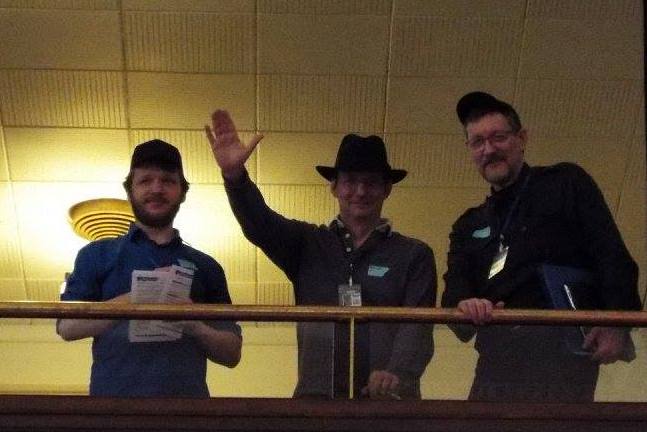
Half of the Alien Control Umpire Team, in their
balcony backwater. (L-R Jaap, Nick and Jon.)
After the game I had a post-game chat with Simon and Jerry, control umpires for the science game, and Paul, one of the African regional map control umpires. They had grinding games, with little respite, and little chance to get involved with the players other than driving the game at busy tables.

Also Paul asked me where the Alien Control team were, because we did not get down to the Regional Map Tables to liaise with them and collect and deliver messages.

So, I feel a little guilty that I had such a good game. And also I need to apologize to all the other Regional Map Control Umpires for our lack of liaising. Sorry guys.

So why was my game so different? In a nutshell I had a variety of thing things to do; some were even rules related, but most involved me using my judgement and what social skills I have.


Mentoring

The first duty of Megagame Control Umpires is to ensure that the players get a good game experience. Period! OK, we try to make consistent adjudications based on written rules, but we are really there to make sure that the players get a win from the experience.

And in WTS2 all the Umpires were very aware that we had many first time players. I think all the Alien players were first time players. That is a very high ratio. Most Megagames over the last few years have a cadre of returning veterans. These players are often cast as team leaders etc. and help initiate newbies through the rites of playing in a Megagame.

So during the setup and during the first turn I went from team to team and asked them if they had everything they required, if they had any questions, and could I help.

One team admitted they were very confused. So I told them that the start of megagames are usually like this though some of their problem were down to the fact that they were actually strangers in a strange land. I advised them to concentrate on scouting, intelligence gathering and even liaising with their "rival" teams. I also reminded them that all their actions had to be paid for in Activation Points (APs) and that they had a limited supply and a limited launch capacity. This started them off and after that they quickly learnt the ropes.

I was pleased to note that at the end of the game one of the players I had attempted to mentor did come up to me to thank me for helping him and his team out, and that he had had a great experience. Ahh... that pleases the twisted soul of an old grognard: enthusiastic young padawans.


Rules problems

After the first few turns the players settled in their roles, and had learnt the routine of each turn, and we left the to run their own internal games. This might be surprising to some people, but as Control we do not really see our role to check on the players. We just ask if they have any problems, we sort out problems and the game generally starts to run itself.

But there are problems. Most of the problems you have are those little pieces of grit that get swept up into the wheels of the game machine. For example during WTS2 players asked me the following questions:
  • The East Asian Regional Table Umpires did not give the alien players any "Human Specimen" cards after they had successfully played an abduction card? Was this correct?
  • I have just got a telepathy helmet. How can I use it to talk to Aliens?
  • How can I return this Cardinal to the planet in a shuttle and not get shot down?
  • How can we divert an asteroid's trajectory? One is about to hit Solaris C.

And this is why I like being an umpire. To resolve the above questions the Control Umpire has to role-play being a senior member of a player's staff, a civil servant, diplomat, scientist or military officer. The guidance for Control Umpires are explicit in this. The trick is not to give the solution, but to answer the questions put to you with a range of options, and to explain the risks, the advantages and disadvantages.


Lack of gaming materials

Some problems are more systemic. For example we had to guide the players through the rules for researching language and humanity. The rules were easily explained, but there was no game board to track the progress of such research. Now I think about it we should have drawn a track for them and plotted this. As it was on the day we asked the science players to come to the Umpires with their APs, and the requisite cards and keep their own track.

Another problem we had was that we ran out of models for PACs, and Shuttles and had to issue chits!


And then you have to make exciting decisions under pressure

The most challenging decision I had to make during the day was the proposed planetary bombardment by The New Republic (NR) team.

My main consideration was that I had to get this right as it was going to be a game changing action. Uptil then the aliens had abducted a few humans, but had not really done much damage. A planetary bombardment could destroy a large city and kill many millions of people.

The first thing I had to do was to remind them how this mission was done. A large capital spaceship enters into a low orbit and strafes the target. This might expose their ship to any space capable interceptors that humanity might have. It would definitely expose them to interception from other spaceships as the trajectory used to line up the strafe would be obvious to any nearby spaceships.

The problem I had as an umpire was that the tracking of fleets had been left to the High Politics game in the other room, which was on the opposite side of a large hall. I checked with Martin, the Control Umpire for the strategic space sub-game, what fleets were in the Solaris C solar system. I then made subtle inquiries with the High Politics teams about where their fleets were. I did not tell them why I was asking, and I asked about all of their fleets. I also asked them to give me the orders for each fleet. This took some time. Looking back on it it would have been great if there was a map with counters to track these things, but there wasn't and Martin and John were working hard to keep the game flowing for 15 players so they had not had the time to make one. Martin had tracked things with arrows on a map. But I wanted to hear from the High Command players what their orders were.

I was then able to tell the NR commander what ships might intervene if he carried on with his attack. This is information that would have easily been available to his staff, but the game system had caused the intelligence hard to find. The NR Commander had orders from his High Command to attack three locations: Rome, Rio de Janiero and Tokyo. I gave the NR player "on the ground" the information about the Imperial Fleet that could intervene. He made his deployment and was going to carry out his orders. I did give him an option to abort.

I then found the Imperial player "on the ground" and asked him some questions about his interstellar capability, what ships he had in the solar system, what bases he had and what was his posture. Again, general questions, but designed to get relevant information and not alert him to why I wanted to know.

I then warned both commanders that at the start of the next action phase I wanted them to report to me before they left for Solaris. Just winding them up really!

At the start of the next phase I gathered all the players round and brought the New Republican and Imperial Commanders to the front. I told all the players that there would be a delay in going down to the planet as we had an incident. I asked the Republican to repeat his orders. This was a nice bit of theatre. His orders were received with gasps, questions and cat calls from the assembled players. I clarified the dispositions of the Republican troops, writing them down on a piece of paper and gave a little explanation to the rest of the players about how the attack would be carried out. I then asked the Imperial player for his reaction and to be quick about it. He was quick and gave his deployment. I gave both players a last chance to avoid combat - this is almost always a possibility in space battles. Both would not stop.

The combat was quite simple, and I was ably assisted by Jon, another Umpire who had turned to right section of the rules and read out the results to each round of combat.

The outcome was that of the three straffing runs, the run on Rome was a draw, all craft on both sides were destroyed or seriously damaged, the attack on Rio ended in defeat of the Republican ship and the Tokyo run was unopposed. Tokyo was destroyed, killing about 10 million people.

This little battle was watched by all alien players (in the Solaris C solar system).

I then told Jim about the outcome of this action and went with him to the East Asia map and watched him implement the outcome. I had previously alerted Jim to the fact that one of the Alien teams were considering this attack, enabling me to get advice from him about the action and warning him of what was in the offing. I then went to the relevant maps - Americas and Europe - to tell the umpires that astronomers and some military installations would have noticed strange bursts of energy and explosions. And then some fragments would fall from space to the planet.


Player feedback

As usual with megagames we do not have a last turn, we merely announce towards the end of a one turn that this is the last turn. Game over. In a good game, the players are disappointed and want to enact their next turns plans, or to make that last rejoinder to the previous speech etc.

I was privileged enough in this game to be the umpire who announced the end of the game to two groups of players. All were disappointed and wanted to continue. One group, which consisted of the Senior Aliens and the UN Council (abducted earlier!) wanted their "last word" and kept on for a couple of minutes making their final points even though they knew the game was over.

That, I think, is a definition of an immersive and enjoyable game.

This makes Control Umpires around the world happy.


06 March 2015

Why I like playing megagames

I was recently describing a megagame to a non-game playing person.

Mike, was telling me how he had recently played a cooperative game with his niece and her family and had really enjoyed the experience. He added that in the past he had played the usual family fare of Monoploy, Cluedo and Risk, and has abiding memory of this was competitive bickering and arguing.

Mike went on to ask me about the games I play. Implying or assuming that they are competitive too, and how did I like or cope with this.

I tried to explain megagames, rather than other board games, though I did mention that I had played a few cooperative games like Pandemic, and had designed a cooperative game called Live and Let Live.

After my quick definition of megagames, as multiplayer games, with hierarchical teams reporting to each other, that often took up a historical scenario like WW2 or the Wars of the Roses, Mike than asked me if that is what I liked: trying to do better than history in the replay.

My answer: I play megagames because I get an understanding of how communications and negotiations work in a conflict and are perhaps the most important element. I might learn something about the history, and the background. But it is the experience of negotiating under pressure, the need to liaise, coordinate and work with my comrades and also with the umpires that makes these games so interesting to me.


17 February 2015

Where's my rubber? Moving information between tables in multi-table and multi-team games.

This might seem to be a very simple thing to do -- to move game related information between tables in multi-table and multi-team games -- but it ain't.

Getting it wrong

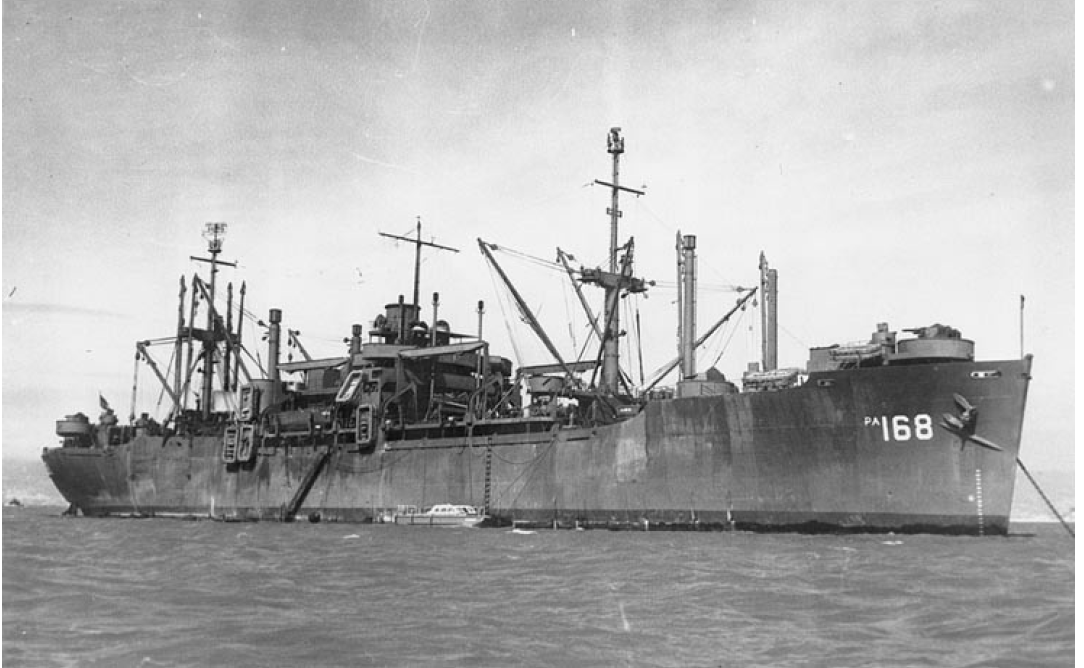
A Victory Ship - USS Gage
I can now admit that in one megagame I and another control umpire completely got this wrong for about 2 turns. We were running the western logistics board for the megagame the Last War, 1942 - 45. This mostly meant that we were running the Battle of the Atlantic. The rules were of course simple to adjudicate. However we did not know what to do with the delivered supplies.

Eventually our mistake contributed to the now infamous "rubber shortage scandal" of the game. With players saying "where's my rubber?", or "are you hoarding rubber?"

Here are the relevant rules:


  1. Check materials available via sea routes from naval Players. Note quantity shipped. This should be based on state of access at the END of previous turn.
  2. Check materials available by land routes on Land Map. Note quantity shipped. Collect Materials Counters from Control. This should be based on state of the routes at the END of last turn.
  3. Work out which Industrial Zones have their requisite materials by placing counters on the IC appropriate card.
  4. Hand over materials counters used this turn to Control.
  5. Collect output counters representing industrial output (Tanks/Man/Ships etc) from Control
  6. Distribute counters ‘manufactured’ to correct location on map (the location of the IZ) for use NEXT turn. 


Now I read it again, I can see why I was a little confused by this sequence. The goods shipped are in effect "manufactured" and should have been moved by someone in 6 - this was not spelt out.

The best way of smoothing these things out is to take the control team through the sequence in a test game and then for the control team to pass this knowledge on to their players during the game.

I still feel a little guilty about this. I know it effected the game as there was a big materials crisis that escalated upto the senior political players. When we realised the mistake we quickly recovered and we as control umpires went down to the relevant "land" table and delivered the goods at the end of turn.

Watch the Skies 2 - control team try out

The reason this has come to mind is that last night - 16 February - I participated in a megagame control team try out, and development session for the 300 player Watch the Skies 2 megagame. This was a very successful evening. Not only did we go through a couple of test turns, we also got to discuss rules changes and developments. This was great. It helped us all appreciate the turn sequences on the day that are sometimes implicit in the rules. For example, when the turn sequence calls for players to deploy their units, do they do this simultaneously or in sequence? These things can be spelt out in the rules, but often aren't and control have to resort to the old control motto of: if I don't know it is right, I can at least be consistent.

But the key thing for me was to establish what needed to be moved from table to table. These are the things that often go wrong. Watch the Skies 2 is going to be mostly a player led game, with the control team, monitoring, assisting and driving the game.

I will be one of the alien umpires. My players' tables will be kept away from the main "earth" tables. The Aliens are in effect in space or in orbits around earth. As each game turn will be about 3 months, the "human players" will be able to move about quite freely in comparison. What I wanted to establish was what will the Alien Players take to the table, get from the table and who will carry it.

I cannot go into too much detail, but it looks like this game's design has learnt from the earlier problems encountered in this tricky business of moving game information between tables in a multi-team game. From experience this is what can go horribly wrong in a megagame.

It's not just logistics

In the example I gave of the Last War and from our try out of Watch the Skies, I was most concerned about moving logistical resources between tables. The Aliens of course will have a resource allocation game too, and I will have this to monitor.

In some ways logistics are the obvious of inter-table bits of game information. But in the try out last night we had an example of how "intelligence" can be perhaps even more slippery as it moves between tables. I cannot go into detail at this stage. All I can say is that the Secret Agents deployed to the board can gather intelligence but the actual information they glean will be literally in the hands of another player or player team not located at the same table. I think we as control umpires have worked out a solution to this, but I know Jim and others did voice concerns that we are setting ourselves up for one of these inter-table movements of game information. Was the game effectiveness of this rule worth running the risk of failure?

I was interested to hear Jim say that one of his design concerns is to remove these inter-table hiccups by getting as much done on each table as was possible.

It might seem to be a small thing, but when you have 300 players and 45 control umpires and about 10 map tables things can easily go missing.


25 November 2014

Funeral Games II - Whoops! A Palace Coup!

In part 1 of my review of the megagame Funeral Games, my character, Perdiccas had been assasinated.

After a break, I was given a new role for the second half of the game. I was to be the youngest, and very wayward, son of AntipaterAlexarchus.

Alexarchus was a very different role, more appealing to the role player in me. Although in the end I did something that influenced the game. I was effective, by accident!

I had only two game objectives in my brief. 
  1. My big brother, Cassander, was always and utterly right and I would follow and do whatever he said.
  2. I wanted to found a New Thebes, in Greece, so my new religion of sun worship could thrive.
In the historical background to the brief I was told that I liked Diogenes the Cynic. In fact I was told he was my hero and if I wasn't Alexarchus, I would have wanted to be Diogenes. I liked new religions, building cities, chatting and hanging out with my mates. I thought Queen Olympias and her daughter Cleopatra made a lovely couple. I though most people in the world were squares and not cool. I wanted to found a new age elite colony of like minded sun worshipers. I must have spent a fortune on hair cuts and clothes.

So I was a Macedonian hippy, with some power and prestige and a very determined and aggressive big brother, Cassander.

It was a very different role from being the authoritarian and ineffective Perdiccas. I could just role play. My first game act was to refuse to go on the Macedonian hunt - I wasn't into killing animals. At any opportunity I could I mentioned the power of the sun, and praised him, sometimes in song. I then took to sidling upto players hanging around quiet tables and asking them if they wanted to be immortalised in stone. I would build them a city, and name it after them, all they had to do was give me 2,500 talents, I could get the Tyche cards and 2 units of Hoplites. To my surprise a tired looking Seleuchus said yes. He had money and liked the idea. I am not sure why, perhaps he thought he would ingratiate himself with my nasty big brother, Cassander.

Anyways. The conversation went a bit like this:

Hey Cassander big bro dude, how's it hanging. (I think I was getting all Bill and Ted on him, at this point.) 

Watcha our kid. Whaddyaupto? 

Dude bro, how's about building the New Thebes and getting all our cool mates to come along. We can smoke and drink and party like the sun ain't never coming back. I got this shaved head soldier bloke, mate of our old Dad, who says he's got enough bread to spread to make us the city, Daddyo.

Well that get's a bit tiresome, but you get the idea.

Anyway, it all worked a treat and we got the new Thebes-Seleuchus built somewhere in the back-olive groves of Greece. The only thing I had forgot was Cassander and his brief. He had been talking with my other brother and they had decided that they were going to capture Queen Olympias and Cleopatra. Well I knew they were the hot couple, always at the best parties, so I approved. Only thing was, he got me and my hoplites to go to the palace when everyone was busy on campaign or partying at the new city. We then killed the guards and our men ran amuck through the palace, capturing and killing the Queen, though Cleopatra escaped. I was mortified. It really was a downer. All that blood on my new party clothes and just when my new city was going to be the hoopiest place in Greece and the rest of the known world. We were going to have the party of the universe. And now we had a dead old Queen looking like a Dutch cheese. 

So I ran off to my new city and chilled out. 

And then I had an idea, I was going to build a protest statue. I was going to build a colossus, of Diogenes, with a miniature Alexander the Great, who would rotate and always be in Diogenes' shade. Yeah, they would be so overcome with shame and guilt, all those turnip headed squares. That would tell 'em. I tried to get, Arrhidaeus, the architect who built Alexander's funeral cortege, to build my colossus, but he got all timid and square on me and said the bad dudes with spears would spit him. I gave him a withering look and went back to my sunlight city.

That was a real bummer.

Then the game ended.

...

This was the complete antithesis to Perdiccas' role. I had a little bit of money, some prestige, and some dynastic points. And I just got in a role-played and a lot of fun. 

Perhaps a great illustration of why megagames are such addictive fun. You bring yourself to the game and make the game you want - within some limitations.


Funeral Games II - The Plight of Perdiccas

I was Perdiccas in the Megagame* "Funeral Games II", played in London, on the 22nd November 2014.

Perdiccas was the Regent of the Two Kings and the titular inheritor of Alexander the Great's power. Alexander died suddenly in Babylon aged 32, just after conquering vast territories, stretching from Greece to India and from Egypt to Bactria. Unfortunately Perdiccas was not the most popular choice for the post. He got the post because he was the most senior of Alexander's generals at the death bed scene. His big rivals were Craterus, somewhere in Asia Minor, and Antipater, somewhere in Macedonia.

It is unusual for me to get such a senior role in a megagame. I have an inkling of why I was chosen for this post. I was chosen so I would fail. Well let me put it a different way: the historical Perdiccas failed because he was not the most popular choice and because he tried to rule by dictate and ordering people about. He was not a good political operator, perhaps a good general, but not able to negotiate, and broker deals like a politician. And eventually he was murdered by his Generals when he has made one too many mistakes. I think I am not a strong leader and would thus recreate history.

I was aware of my destiny with history. And I was aware that my fellow Generals and other players would probably have briefs to dislike, or distrust me.

My game objectives, given to me by the game designer in my game briefing:
  • Issue strong and clear commands to your subordinates across the Empire.
  • Regain control of the Empire, especially the frontier provinces
  • Employ someone at an early stage to do a financial appreciation
  • Decide on the outcome of the Athenian Appeal against the Exiles Decree
  • Marry into the Royal Family if at all possible
  • Ensure the survival of the two Kings unless it makes more sense to ask the Macedonian Assembly for ultimate power.
  • Do all you can to repay Eumenes for his loyalty

Now I am firmly in the school of Megagame players who honour their player objectives, even if my game-playing brain is saying better you do something not in your character's brief. Perhaps this is the other reason why I was selected for this senior role: the designer trusted that I would try to follow my brief and not get clever and start to develop a clever political strategy to survive. Megagame designers are very keen on getting the players' casting right. It is probably the most important decisions they take to cast players into roles that means that the strengths or weaknesses of the historical characters are mirrored by the personality of the players.

I decided after a little reading around the history of the time (Wikipedia!) that the key to my brief were the first two objectives. Perdiccas had tried to rule the Empire like he would an Army. I give strong clear orders. I was concerned with the entire Empire, not my little patch of power in Persia. If I was sensible and a gamer I would have started brokering deals with my subordinates and rivals and started to limit my ambitions to perhaps control the provinces around me in central Persia. I would have been less of a Regent, and more of a survivor.

But as I said, the briefing informs how I will play the game. I am not one of those armchair wargaming generals who thinks they have thought up some fantastic strategy and want to try to do better than the historical counterpart. One of my great joys in playing in Megagames is that it enables me experience as near as I can what it is like to be in Command, or to be a General etc. 

In this game I was overwhelmed. I tried to meld a team of inexperienced players (for several their first megagame) into a team that ran my operations, my intelligence and my logistics. But this was difficult. One player would not cooperate and gave me a lot of stress. The others were hesitant and coming to me for every decision that I had hoped they might get on with. And then I had all those loyal subordinate generals, in far flung provinces, sending messages, requests, suggestions, whinges, accusations, and admonishments. Often in the game I had a queue of players waiting for their ten seconds worth with me. 

If I was a more focused player, a more calculating player I might have coped better with this. As it was I was overwhelmed. I started to narrow my focus, crisis manage from one input to the next. Occasionally I wanted to take control - go and negotiate with a player - and my arm was jostled, my elbow gripped and another player asking to talk to me.

And this for me was an interesting lesson in the failures of leaders in history. Some people can and have excelled in leadership. And I - and others - do not. I cannot dismiss and ignore people, and talk to only those I want to. I find it difficult to keep in my mind's eye my objectives and aims. I get pushed and pulled by the immediacy of events, requests, conversations etc. And this led me to make the mistake that would become my fatal mistake.

My mistake was to allow the betrothed princess Eurydice to come to Babylon and marry Philip III of Macedon, the idiot half brother of Alexander the Great. I thought it would mean I would control one of the royal princesses and it would give me another thing to trade. However, soon after her arrival she secretly married Philip. She apologised and looked innocent. I believed her and forgave her. She then took control of Philip, and I lost some "Legitimacy points". She apologised and looked innocent. I believed her and forgave her. And then she set off with the funeral cortege of Alexander - without my knowing, without my permission and with nothing I could do about it.  

I got angry - well more of a role-play anger - and had a few shouts at people. But I realised that the bindings of my Regency were becoming frayed and undone. When the body of Alexander was buried in Alexandria, Egypt, I saw red. I denounced Ptolemy as an outlaw and asked all to turn their hands to defeating and capturing him, with intention of moving Alexander's body to Macedon for a proper burial.

As I was making my speech to the 
Macedonian Assembly... 
I was assassinated by 
Peithon and Puecestes. 
And then... well it all went wrong. My armies marched, some generals hung around, some slunk away and only a couple came with me. I had to leave most of my loyal supporters in Babylon looking after operations and watching the other generals. I came a cropper at the Nile, a flood took away part of my army and my subordinates lost faith in me. Grasping at papyrus reeds I took the opportunity to attend a Macedonian Assembly in Alexandria. I made my case about the outlaw Ptolemy, there were strong words said, accusations etc. Eventually the Assembly voted out my declaration of outlawry of Ptolemy and then I was stabbed in the back by my generals Peithon and Peucestes.

And as the blades went in I said: "thank f**k for that, I can get a cup of tea now." My games was over, what a relief.

And this was the other insight that the game brought. Towards the end of my game I realised that all was failing, and that it was only a matter of time before I was stripped of all my power by my rivals. So I did something I could do - I took control of a field army and marched, giving distinct, clear and strong orders to march and fight and get that outlaw Ptolemy. I was so out of control of the political situation that I decided to roll the "iron dice of war" and take control of an army on campaign. If you sometime wonder why generals do foolish things in history, like march to the attack when their support is ebbing, I had my answer. When all goes to sh** you start to focus on doing things you can control.

A great game, even if I was backstabbed. 

I learnt a lot about myself, and about command and leadership. And confirmed that I am no leader of men. I make a good staff officer, a loyal subordinate. I am one of the world's NCOs.


* Megagame is a game about a conflict that involved teams arranged in hierarchies. It usually involves about 30 to 50 players, some rarer games having 150 players. If requires people skills more than tactical or strategic knowledge. It requires that the players talk to each other, cooperate within their team, seek information about the enemy and negotiate, make alliances and political deals.

03 September 2014

It all went swimmingly


It all went swimmingly.


Guards' Armoured Division, Wargame Diary

Market Garden MegagamesNL,
Nijmegen, 30th August 2014


Move 0 – morning (pre-game)

A superb performance from the 5th Guards' Armoured Brigade with support from the Guards' Divisional Artillery Group (GDAG) and XXX Corps Artillery saw a deep penetration into the German lines.


Move 1 - afternoon

Orbat
Guards' Armoured Division (GAD) plus the Household Cavalry (HC) Regiment of armoured cars and the attached 129th Infantry Brigade from 43rd (Wessex) Division.

Activity
The GAD spent the afternoon reorganising after the morning assault of the German front line. Overnight they prepared for an assault next morning.

5th Guards' Armoured Brigade (GAB) was in the front, along the Hell's Highway, with a recce screen thrown out by the HC in front of Valkenswaard.

The artillery regiments had got into road columns ready to move forward. Artillery support was made by XXX Corps artillery.

The GAD supply dump was near Lommel. Up front with the 5th GAB was the Guards RASC Column. Collecting supplies from the base was the 90th RASC

129th Infantry Brigade was to the east of the positions and was patrolling and probing into wooded areas attempting to discover if the bridges were being held. As they approached the first bridge the German forces there blew the bridge.


Move 2 - morning

Orbat
129th Infantry brigade was detached, back to 43rd (Wessex) Infantry Division.

Activity
Major assault by 5th GAB, with artillery bombardment from the XXX Corps and a good show from the RAF. The forward platoons of mechanised infantry discovered that the German infantry positions had been weakened and the infantry had moved out over night. The Brigadier swiftly asked the XXX Corps to move its fire plan to shift its main effort to the second line of the Germans near to Valkenswaard. This was successfully done, and the armour and mechanised infantry rushed these positions under a superb effort from the Corps Artillery. A few self-propelled anti tank guns – Panzerjager remained active and a few Shermans were brewed up but the FOO directed 5.5 stonks which suppressed them. The RAF were excellent and concentrated their bombing in the rear of the second line causing havoc - which we witnessed later as we had to literally use Shermans as bulldozers to clear the wreckage off the road.

The Divisional commander (the Old Man) urged the Brigadier of 5th GAB on, on, and on to Eindhoven and beyond. The Irish and Grenadier Guard armoured battlegroups brushed past groups of bewildered Germans attempting to surrender and with a cursory glance our happy Tommies pointed down the road, “hande hoche down there mate.”

As our armoured columns raced down the road the Sherman's made good use of those pintel mounted machine guns and strafed soft skinned transport columns, the men not even bothering to loot the paltry German supplies – who wants sauerkraut and acorn coffee – and they rapidly found themselves pushing into the streets of Eindhoven shooting up surprised flax units and ersatz groups of old soldiers with old Mausers who either took to their heels or did the hande hoche dance.

XXX Corps had information that the bridge over the Wilhelmina Canal at Son, north of Eindhoven, had been blown. So the HC Regt was pushed along the road encountering some German resistance on the road near Acht.


Move 3 - afternoon

Orbat
Addition of 525 RASC Regt to Divisional assets.

Activity
The 5th Brigade with HC probed for the flanks of the position and prepared themselves for an assault the next day.

The Divisional commander received notification from XXX Corps that the German units had elements of the US 101st Airborne Division in their rear and were thus surrounded.

The Old Man spent a lot of time trying to sort out his supply problems. Apparently his RASC supply columns had been caught up in the mother of all traffic jams along Hell's Highway, mostly being caught in the queue of the 43rd and 50th Division footsloggers. His supply problems were temporarily resolved when the XXX Corps was assigned the 525th RASC Regt. already loaded up with supplies.


Move 4 – morning

Orbat
No change

Activity
Over night reports from infantry patrols noted that the German units had left their positions and had moved over the canal to the south-west of the road!

The attack was cancelled and the 5th Armoured Brigade moved forward gingerly only to be greeted by relieved looking Yanks, who were only too pleased to share a hot cup of char with our Guards. The Old Man was on the blower toute suite and gave the Brigadier a rocket getting him to move his troops on, on and on again, destination Nijmegen.

The 5th GAB moved along the road, lined with smiling 101st paras. We passed through Best and Sint Oedenrode courtesy of the US Airborne only to find that the bridge at Veghel had just been taken by a well organised German counter attack using artillery and and infantry attack from the west, driving off the US paras weakened after several days of continuous fighting.

During the day the Old Man ordered the move of the Guards Supply Dump to Eindhoven only to find it could not make any headway along the road, still being blocked by the 43rd Division and its preparation for an assault. The supply dump moved up to Lommel instead and waited.

The Old Man garrisoned Eindhoven with the Welsh Guards mechanised infantry battalion, the AA Regt, the Engineers and the 525th RASC Transport column, still with essential and now very precious supplies.


Move 5 - evening

The GAD was able to concentrate itself before Veghel, with the 101st Paras spreadout on the flanks in support, the two Guards Artillery Regts. were ready to give fire support. Again with the 5th GAB in front. The 32 GAB was further down the road waiting its chance.

Belatedly the 525th RASC Regt was sent from Eindhoven, the Old Man reassured by the 101st Paras that the road was safe. A resupply was managed that night in the forward positions of Veghel.


Move 6 – morning

The attack went in as planned though there was a no show from the RAF, something about the weather they said afterwards. The Germans had dug themselves in but seemed a little disorganised and were not even supported by their artillery, which had caused the US paras such problems the day before. Even so the fight was a little stiffer than before, but we were supported gallantly by the US paras who wanted to show us Brits that they knew a thing a to and with their ability to infiltrate across any sort of ground they were able to out flank Veghel and subject the German positions to a withering flanking fire. Soon our armour was able to take out their strong points with our Shermans using their main gun at short ranges, and the position crumbled quickly. The paras took many prisoners as our armoured battlegroups motored through the streets and on, on and on to Grave and beyond.

The 5th GAB moved down empty roads through Uden to find its way blocked by some German positions just short of Grave.

The HC checked out the airport at Volkel and was blocked by some accurate flak fire across the open fields. It was later supported by the Irish Guards mechanised infantry battalion from the 5th GAB. The 32nd GAB was on the road past Uden. Our artillery remained in its positions to support the 101st in guarding the crossing at Veghel.


Move 7 – afternoon

Our supply situation was now critical. Later in the day the positions at Veghel were threatened with a pincer movement from both east and west of the road. The 101st infantry in the town were getting jittery. The HC and the Irish Guards were hastily recalled to assist and our artillery group gave sterling service bombarding the gathering German troop concentrations. The unflappable Guards Artillery CO informed the Old Man that they had used their last 25 pdr shells and he was going to issue his men rifles and bayonets and show those Screaming Eagles how to give Jerry the taste of cold steel.

Luckily the German pincer proved chimerical and there was only a combined infantry and artillery attack from the west that was causing the US paras some problems, though the appearance of our “armour” soon dismayed the Germans and the attack petered out.

In the front, the 5th GAB was preparing an attack with the assistance of the 82nd Airborne units. The 82nd were ready to use up the last of their ammo to give the 5th GAB an artillery bombardment with their light 105's. Things were getting desperate for the 82nd..

The Old Man at last received word that the road to Eindhoven had been cleared of Germans and our foot slogging infantry was making its way to Eindhoven. To make amends, XXX Corps ordered the up several RASC columns to supply the GAD. The GAD own RASC columns had managed to reach Eindhoven.

One success cheered everyone up when the Engineer unit reported that it had set up one of its Bailey Bridges at Son. This meant that we now had two routes north of Eindhoven, though as yet no traffic as the road was only just being unblocked.


Move 8 – morning

Unfortunately the counter attack on the bridge at Veghel had delayed the movement forward of our promised supplies. The GAD RASC Regts. were still at Eindhoven and started the journey late that morning. This meant another day waiting for supplies to catch up the teeth, what a tale.

The 32nd GAB took over the front lines from the 5th GAB and prepared for an assault. The 5th GAB probed round the flank of the German positions just south of Grave and found numerous German infantry dug in.

The HC screened off the road to Volkel and the Irish Guards mechanised infantry battalion moved up Uden. The Old Man was concerned that the road would not get broken just when he needed to get his supplies up.


Move 9 – afternoon

The Old Man got into his battered Humber Staff Car and personally directed the GAD's RASC transport columns along the road, bollocking any who dared to get in the way. He said later he had never had to play a being a traffic cop before and it was an invigorating days work. No doubt the RASC were galvanised by being reminded of the anonymous private who had driven his wagon of Brown Bess ammo to the north gate of the besieged Hougomont Farm at the Battle of Waterloo. The drivers drove like demons along the road, not heeding any danger, just making speed. A few hours later they were delivered ammo and fuel directly to the tanks at their start lines, and with an “off you go mate, see you in Arnhem” the 32nd GAB went into the assault. The Taffy's and the Coldstreamers, were at last given their chance to show the Paddy's and Grenadiers what they could do.

Later the Old Man confessed to me that he had had to be nice to the CO from the 43rd who had button holed him in the Corps mess and asked him how he liked the Infantry's bully beef – the old man said he had not the heart to tell him that they just left the 43rd's grub to the hungry US Paras. He thought it was only fair as the Guards had nicked the Paras Hershey Bars.

The Brigadier of the 32nd GAB was a little concerned at the lateness of his attack as he had heard that the 82nd were under attack from a new group of krauts who had appeared out of the polder. The hard pressed 82nd in Grave had withdrawn when they found themselves attacked by superior Germans with artillery support. The Brigadier guessed that this meant the German's in front of him had been weakening their front line with the Guards and with a tally ho the Coldstreamers were off after the fox running before them. They easily over ran the thinned German positions in front and launching themselves into the Germans who were busily trying to sort themselves out in Grave after they had just captured it from the Yanks. It was a messy affair, with a much lighter artillery stonk from the 82nd, but our lads had their blood up and with our Shermans lobbing shells directly into the German troop concentrations the Guards Infantry demonstrated why they were still the best, driving up in their armoured half tracks and debussing right ontop of the hapless Germans! Hey ho, to work we go with a bayonet and grenade and an M3 Armoured Halftrack!

With the town taken the Welsh Guard battlegroups then pushed through the town on, on and on, towards Nijmegen and Arnhem. As the light faded the HC pushed onto the Island at last.


Move 10 – morning

With an early morning start the whole division, lead by the 32nd GAB, and now including about six RASC transport columns from the Guards, the 43rd, the 50th and the XXX Corps, moved along the road to Arnhem, passing through a eerily quiet Nijmegen, only a few tense 82nd airborne chaps poking their heads out to wave us along.

Once on the “Island” we started to met some grim looking Red Berets. They all assured us that there were no Germans on the road and so the men of Harlech sped on and met no foe men, just over excited Polish in khaki who were a little too enthusiastic in their welcome. After some language difficulties – the Welsh thought the Poles were Scottish, and the Poles mistook the Welsh for Irish – they drove on into Arnhem.

We heard later from Corps that the Germans had attacked Nijmegen and Veghel (again) as the Guards Armoured Division had swanned unopposed into Arnhem. We didn't even notice!!

Hurrah for the Guards.

….......

Note

This was all written from memory a few days after the game. I might have got some of the facts wrong but I am pretty sure it is a reasonably accurate record of the GADs progress during the game.

I was the Liaison Umpire for the Guard's Armoured Division.

Nick Luft


Popular posts