Showing posts with label game control. Show all posts

05 July 2017

Confessions of a MegaGame Control - Knowing when to say no

This is part of a series of reflective posts I am writing about my experience as a Game Control in a Megagame*.


Knowing when to say no

This incident demonstrates the problems that can arise when a Game Control is making ad-hoc decisions and loses sight of the the larger picture. 

It is also an illustration of how Game Control will err on the side of caution especially when a player's actions will kill, kidnap or disable another player's character directly. Unless of course it is all part of the plan. I know this because I was once subjected to an attempted poisoning and then later successfully assassinated in a megagame, and this was well within the game designer's expectations.


Survivalists and the Feds


Image may contain: 3 people, people smiling, people standing
Three of the Survivalist Militia Players.
They don't get on very well. A bunch a freedom or death, gun totting, whiskey swigging backwoods country hicks don't like the Feds. They are to blame for most of the things wrong in the world today and they have a very long proclomation on the web that says so and lists all their grievances.

I had become the de facto control for the survivalist team who were very adept at creating schemes outside the usual game processes.


The plan

Juan, was the leader of the Well Ordered Militia (WOM). He told me that he had been in email and phone conversation with the player playing the Secretary of State. These conversations had been initiated after Juan had managed to attract his attention after he had released his Wanna B3 ransomware virus that nearly took down the nation's banks.

Juan's plan was to get the Secretary of State into a room with one of his men and explode a suicide bomb.

So several alarm bells should be ringing for any experienced Controls.
  1. A player attempting to kill another player - and not really part of the overall story arc of the game designer.
  2. A member of the Well Ordered Militia was willing - according to Juan - to be a suicide bomber.
  3. It would mean organising the movement of two players across many maps to actually meet.
  4. There would be a stand-off which are generally very hard to control and adjudicate.
  5. If successful his little group would probably be squished by the Feds. Thus diverting their resources from the main game effort, counter to the game story arc.
  6. Did his group have the knowledge to setup a suicide vest.

How to deal with difficult, game changing actions

Image may contain: 5 people, people smiling, people standing, shoes, suit and indoor
Madame President and her Cabinet
My attitude is never to say "no, it's impossible". And also rarely say "yes, that's easy, just do it." As Control I want the players to have a good gaming experience. In fact that is the most important reason we work as Control: our priority is the gaming experience of the players. 

My first reaction was to ask why he was going to do this. Juan pointed to his brief which did actually say he was to do all things he could to attack or disrupt the Feds. So it was part of the main story arc.

I then asked how he knew he had a "volunteer" to do the suicide mission. He admitted he had no card or reason, just a hunch one would volunteer. I would not accept this. One real world thing I notice is that right-wing militias seldom select suicide as an operational tactic. I wanted a special event card to allow this - a game rule - to prove he had a volunteer. Juan didn't so he went away for a bit to think about this.

His next plan was that he was going to do it himself. OK! I am not worried about a player exercising agency over their characters. Though I was worried by this radical exercise of player agency.

So then I started pick at the details of making the vest, organising the meeting etc. And eventually I think Juan realised that the suicide thing was not going to work. The Feds would have too much security, his skill base was not sufficient to hack together a suicide vest etc. So Juan then moved to kidnapping instead, a more likely proposition, though still a very difficult one. Juan hammered out his plan. 

At this point I decided I needed to talk to more people.


Talking to others about wizard wheezes is a good thing.

No automatic alt text available.A big part of megagames is ensuring there is good information flow. This is not just the players. In fact the players information flow and blockages are usually well chartered by the designer and mechanisms are in place to enable or disable the flow of game information. The problem is that Control has to flow crucial information between Control. Sometimes this fails - see my post on my failure as a logistics control in a megagame. Controls have to think carefully about ad-hoc decisions. They sometimes affect other parts of the game remote from themselves and sometimes they need to let other Control know something out of the ordinary is going to happen. The Press and Media players often assist this game flow, but they cannot be relied on and of course Control actually knows what really happened. 

So the first person I wanted to talk to was the player playing the Secretary of Defence. It just wanted to confirm he knew about this militia leader and if he knew of a proposed meeting. I spoke to him and checked this.

I couldn't find the Federal Team Control, so I went back to Juan. Luckily I noticed Jim walking past. So I asked if he could hear out this scheme. At this point, I would have probably asked any other Political Control, or Game Control nearby to hear out this plan. I was worried about.

Jim heard out the plan and quickly stopped it. Jim said no it would be unfair for any State based player in the London game to physically meet up with a Federal player. The Federal team players were kept in a separate room in London and were only supposed to interact via email or phone with the 12 other megagames around the world. Just because Juan was in London would be unjust to the other remote games and their players.

At this point I realised I had forgotten about the wider picture. I had gotten so much into the details of the plan that I lost track of the primary concern of the overall game. 


You learn from your mistakes

I put this example up here as a lesson. If in doubt, prioritise the requirements of the larger game over the concerns of one player. Do it tactfully, but do it and be prepared to explain why.

In my defence I think I was distracted by the many difficult things in this plan. I was very sure it was going to fail, and only clever thinking and a big dollop of luck would successfully implment the plan. So I got involved in the detail in an attempt to dissuade the player. Maybe I should have said "it's not very likely to succeed for these reasons" earlier.


----

*Urban Nightmare: State of Chaos 

I recently was a Control in a Wide Area Megagame. I would suggest that those who do not know what a Megagame is visit this site - What is a Megagame?


04 July 2017

Confessions of a MegaGame Control

My intention in writing this is to explain and explore how an Umpire in a large multiplayer game makes decisions and rulings where there are no rules or mechanics to guide them.

There has recently been a lengthy discussion on Facebook and in the CLWG about the difference that rules can make to the outcome of Megagames. Some want accurate rules that reward informed and intelligent decision making and others prefer to see a narrative structure building ontop of very simple rule set.

I want to add my perspective to the above, as an Umpire (known as Controls in Megagames) who frequently has to operate where there are few rules.


Urban Nightmare: State of Chaos 

I recently was a Control in a Wide Area Megagame. I would suggest that those who do not know what a Megagame is visit this site - What is a Megagame?

No automatic alt text available.
The City Map of Urban Nightmare
What follows is my view on how I worked as an Umpire (the game calls us Control) working in a game that is deliberately light on mechanisms to encourage emergent gameplay.


Two types of Control

There are two types of Control is most Megagames. In my estimation.

The first are the process focused Control. These are usually those who control maps or areas. They ensure all actions are taken in the correct sequence, they ensure that the rules and the mechanics are observed and they maintain the relentless pace of the game. I do not work well as a Map Control. I get overwhelmed.

The other sort of Control are those that manage the interactions of people. They prod and remind players, they drop hints to players, they make decisions outside the basic rules and mechanics of the games. They are often political umpires, small team umpires etc. I am generally this sort of Control. I like to say its because I am a people sort of person. The less charitable say I am just a snowflake Control and cannot take the heat of real Control at the map face.


My role in the game

I was the Federal Players Control. I was lucky in that I had three experienced and strong players who I could trust to pick up their role and go with it requiring minimal intervention from myself as their Control. Their role was to contact the Federal Team who were in another room and tell them what was happening in their State, Mishigamaa. There was one player for the Pentagon, one for Homeland Security and one representing the Whitehouse. They had a few assets like action cards and a few deployable assets like medicines, and, as I surmised, a small team of assistants, bodyguards and drivers.

I knew from the outset of the game that I was not going to be heavily committed in processing mechanisms like the Map Controls would be. My job as Control was to ensure my three players knew what their role was, to enable them to play their game by providing advice, prompts as necessary and smoothing over rules interpretations. Some less charitable Controls told me that my role was merely to hand out counters that the Federal Players had been assigned by the Federal Team after confirming this order with another Control.

But what this role did was to free me to assist where necessary. So as a good, experienced Control I liaised with all the other Controls at the start of the game. It is a great idea to do this as you need to know who to hand over certain game issues to and who to seek advice from. A central tenet of good Control is ensuring there is good information flow between those who need to know. I also discussed how I might be additionally tasked, as I guessed I was not going to be over burdened.


Actual role in game

In the game I still had to look after my Federal Team. But as the game progressed I was increasingly employed as a Control for the Survivalists. This was a very loose "team" of four players who played armed militias usually with some radical ideology. This job was given to me by the Game Control who noticed that these players were attempting to work with the Map Controls but because of their particular needs and style of play they required more attention from a Control than the very busy Map Controls could give them.

Thus I was controlling two very different teams.

I also noticed that one of my comrade Controls was suffering rather from over work, this was Bruce, who was the political control for the State Team. He had three sub teams of about 5 players, the State Governor, the State Police and The National Guard. I did not take any decisions from him but often was able to advise the player on who to talk to and what had happened in some incident I had controlled. 


Making decisions with no rules - or just making it up as you go along

The only defence of such ad-hoc Control work is that Megagames are designed to be like this. They are not boardgames with precise games, precisely delineated playing areas and player roles. Megagames don't have even have winning conditions or victory points.

Perhaps an example is the best way to illustrate this. (Note I have forgotten some of the names of places and organisations and have had to make them up. My apologies to those who were there, only you can know what it was like to really be there.)

Image may contain: one or more people
A Player updating the Federal Sitrep Map
Early on in the game I was approached by the Game Control, Brian, to assist with running an attempt by a Survivalist to attack a Federal jail in his State. The Game Control gave me his estimation of the real world situation. A Federal Jail would hold a couple of thousand prisoners, would be heavily guarded and the State Police would be liaise with them. Brian thought the Survivalists had a cat in hell's chance. Be gentle with them. The main reason he was doing this was that he had ruled that the Federal Prison, at Fireton, would not be on one of the City Maps. He did this to prevent it overwhelming the Map Controls and because Federal Prisons are usually in the countryside away from cities.

So in terms of the game mechanics I only had a State Map with some rules about how units could move with a hastily drawn on Fireton State Penitentiary.

So Brian left me with Juan - a Survivalist, Freedom From Federal F***ers (FFFF) and I asked him what his plan was. Juan told me he had a insider in the Penitentiary who was also a member of the National Guard who was going to assist his break out plan. And he also told me that he wanted to do this break out because some of his FFFF members were inside, one of whom was a very valuable asset, a hacker.

I was surprised. Juan spoke to me, I think on Turn 1 or 2. He had a plan, all sketched out in his head. This was not in his brief, nor on his action cards. And there is one thing Control like to reward in Megagames, and it is player initiative and player narratives, so long as they are grounded on real world thinking.

So I asked to speak to the National Guard player. Juan came back with a National Guard player, Joe (sorry name not remembered) who confirmed he was sympathetic to the FFFF and wanted to do right by him. I ruled that it was likely that one of the National Guard players would be a guard in the Penitentiary, so I rolled an effect dice, that was two 6 sided dice (2 d6) - the lower the number the less effective their support would be. I told the players that if I got a 4 or lower they would not be able to go ahead with the plan. What I did not say was that the higher the number rolled would give a better chance for the break out to succeed.


Did you see what I did there?

I made up a rule on the spot.

Image may contain: indoor
A Press Player - Too much fake news.
I have no idea if there is a National Guard rule that you can or cannot recruit prison guards to their ranks. But I thought that the chance of a Prison Guard being in the National Guard was a relatively likely thing. If they like hanging out in uniform with guns and all sorts of kit, they would like hanging out with the National Guard with even more shiny, lethal kit.

So in game terms I made a ruling based on my assessment of the real world and a dice roll to determine the effectiveness of a players guess of what would be a reasonable thing. And I used an effect dice. I also told the players what the chances were of not having sufficient inside support - just a mouthy National Guard guy who thought bigger than he could act. And I also had a rough idea of how the dice roll would add to the next decision I would take. I call this an effect dice. The answer is not a binary yes or no, but a shade of yes but with a +1, or yes with -1 etc.

I could go on about the detail of this incident. But this is essentially what my role demands of me in a Megagame. It is more akin to running a Role Playing Game. So in terms of any discussion about should the game have better rules that reward intelligent decision making, it is irrelevant. There is no way you can make rules for the imagination of the players who like to play in this sort of game.


But what about the larger game?

I'm glad you asked that. This is indeed the tricky element to making these ad-hoc rulings.


Ad-hoc cannot be replicated

I am unlikely to remember the exact ruling I used to determine a special case. So later on when I about to rule on another special I might be inconsistent. Some players might feel such rulings are unjust, and I have sympathy for this position. My defence is that events are rarely so similar as to require adherence to a strict mechanism.


How does this change the larger game.

This is by far the most serious issue with such ad-hoc rulings. An umpire could make a decision that had larger consequences for the game. In UNSOC I did make one of those decisions. I later on ruled that Juan had managed to bluff his way into a bank and get his hacker to spread a Ransomware virus taking down some local, then State and then National banks. I used similar mechanisms to adjudicate the effectiveness of this intervention: an effect dice for each element of the plan, and an explanation of the risks to the players and the odds as I assessed them.

The problem is that now the larger game is effected in a way that the designer never envisaged and the whole game system has to cope with a Governor, the FBI and eventually the President taking time to devote time and resources to resolving a financial crisis, with no rules for doing this in the game. I must admit, I had not really thought this through. I did make the chances of it happening difficult and I had told the player that his hacker had failed in doing a brute force hack of the banking system and they had to resort to using violence to get the password of the bank manager. I thought this was a good hint that his hacker was again not that good.

My plan was for the virus to be rapidly counteracted within the city the hack had taken place. I had hinted that the FFFF hacker was not that good, more of a Script Kiddie. And that the hack would not go much further than the State it started in.

However I had not counted on Juan, who briefed the Press about what he had done, got me as Control to confirm the "there has been a hack on the banking" story to the press player. I did not realise it would go "viral" and get other Control involved. In the end Game Control ruled that the virus had been rapidly countered and the banking crisis averted, probably after extracting some cash or resources from a senior political player.

Let's put it down to Emergent Gameplay!


This is the rare beauty of Megagames

This is why some players love Megagames. And perhaps why some players dislike Megagames.

There are some situations that call for ad-hoc, decisions taken by Controls like myself. From the first group of Map Control you usually get tactics and optimal strategies emerging within the confines of the rules. With the second type of decisions Control take you get Emergent Gameplay.

Earlier I said that there are two types of Control. Now I think about it, there are probably two ideal types of gamers: those who like imaginative, narrative based, emergent play and those who revel in details, procedure and optimal playing strategies. Obviously there are rarely extreme examples of either type, usually we are a blend of both ideal types. I would suggest that LARPers are on one extreme and Chess and Bridge players are on the other extreme.


Future examples

When I get the chance I will go through in more detail one the decisions I took in this game. I still have my notes from one of the wizard wheezes I ruled on. 

I hope that in sharing such examples I will illustrate what it is to be this type of Control in Megagames. And that my example will enable me to receive critical assessment of how a Control should or should not make rulings. I might find that other Controls or Game Designers would prefer it if I didn't do such ad-hoc decision making. I might find that some players would never want to be involved in such make believe events, and can hardly bare to call the games. 

Whatever, I hope the above helps others get a better idea of what Control sometimes does in Megagames.


23 March 2015

The cracks between tables: Moving the narrative between teams in megagames

I have another confession to make as an Control Umpire for Megagames.

This is similar to the Rubber Failure I wrote about earlier. This time I want to talk about a failure, why it happened, why Megagames are more prone to this particular problem and how it could be solved and the problems with the solutions.


The fail

In the Megagame Watch The Skies 2 (WTS2), there was a problem of an asteroid that was predicted to be about to hit earth with the potential for ending all life on the planet.

I was the Control Umpire for the Alien Expeditionary teams. One of my teams came to me and said they had heard about this asteroid from a human government and wanted to help by averting this disaster.

We talked the various solutions through - this was me as an umpire role-playing their various scientists and technicians on the players' staffs. The team decided which solution they wanted to do, they paid the cost and the asteroid was diverted onto a new course that would take it harmlessly past earth and into the sun. I charged them four Activation Points to do this. This was half the cost of creating a moon base for them. The cost was mostly in lost opportunities, as sending a light spaceship with the right kit onboard to land on the asteroid was a trivial problem for them. They just lost the ability to use the spaceship to do other useful stuff.

And this is where it got difficult and I think I failed as an umpire. I forgot to follow through on this outcome. I forgot to tell the players to tell whoever had told them about the asteroid that they had diverted it. And I didn't think to find the umpire who had deployed this problem and tell them (and I didn't know who the umpire was).

I think this is why later in the game we were told there was a second asteroid. The message about the solution had not got through to whoever generated and was driving the problem.


The problem of umpire to umpire communication

And I think this was the fail. A failure of an umpire to liaise with another umpire.

How else does my ruling get fed back to the umpire who owns the problem? Until the umpire owning the problem is informed the problem will remain, no matter what steps other players and umpires do in the game.

I have attempted to reconstruct lines of communications that led to this - or just guessed.

Rob, one of the game control umpires, who sits outside the team and map games, has a role to have an overview of the game, and to generate problems to prod parts of the game that need a stimulus. If he thinks Table A is quiet or Team 42 is not having a good game he can drop a little bombshell in their laps. This was part of his role. To do this he tells some players or umpires about an incident. My guess is that Rob told those teams that had advanced astronomy or organisations like NASA etc. So it would probably be the American, Russian, and Chinese teams. Again this is a guess.

I do know that the USA team discussed the Shakewell asteroid problem. At some point they asked their alien player "friends" to help and the aliens were willing to help the USA and said they would do it. This alien team worked out a solution with me, paid the resource cost and diverted the asteroid. And then I forgot to check that the solution would get passed down the chain of communication.
  • Did the aliens tell the USA they had solved the problem?
  • Did the correct player on the USA team hear about the solution?
  • Did that player then tell the correct umpire that it had been solved?
  • And why didn't I follow up and find the umpire and liaise with him?

The cracks between the tables are bigger than they look.

At the risk of sounding the obvious, this is the most difficult thing to do in multi-player, multi-room or multi-table games. How to move information between tables is hard. Sometimes it is obvious. For example, when a spaceship blew up over Italy, I told the Europe Regional Map Control Umpires about this and let them run with it. But it was upto me as an umpire to liaise with other umpires about this big news.

But when my aliens divert an asteroid into the sun, who do I tell? The players were two steps away from the umpire who generated it. So they cannot tell me which umpire I need to liaise with.

I should have found out. I should have guessed. My bad.

Solutions

I can think of two solutions.

1. Don't worry about it - it's just a narrative. The game is actually a narrative that is being told by the players with assistance from the umpires. So there is not a "game reality" and I did not fail. We are just adjusting our narrative as best we can communicate. Only when the story is told and accepted does the story appear in the game reality.

Though I have conceptual problems about this. I do perceive there is a "game reality" which has consequences for actions. So we have to get it right.

2. Have concrete things to represent real world problems. For example the Umpire generating or handling a real world problems outside of the main rule set, hands out cards - pre-prepared - with his details on it - from the desk of  the umpire for game control. These cards are handed out as the problem is introduced and the players are told that these need to be shown to the umpires or other players. When the card is resolved, the umpire or player can take it back to the original umpire.

The problem with this is having enough cards, of players hanging onto cards and not handing them on, or just loosing cards.

Another issue is that it limits the creativity of the umpires, having to think up of problems pre-game to print out.


Discusson

I hope this little admission is taken in the spirit it is given. 

I am trying to improve the experience of megagames and trying to learn lessons so that others might learn too. 


17 February 2015

Where's my rubber? Moving information between tables in multi-table and multi-team games.

This might seem to be a very simple thing to do -- to move game related information between tables in multi-table and multi-team games -- but it ain't.

Getting it wrong

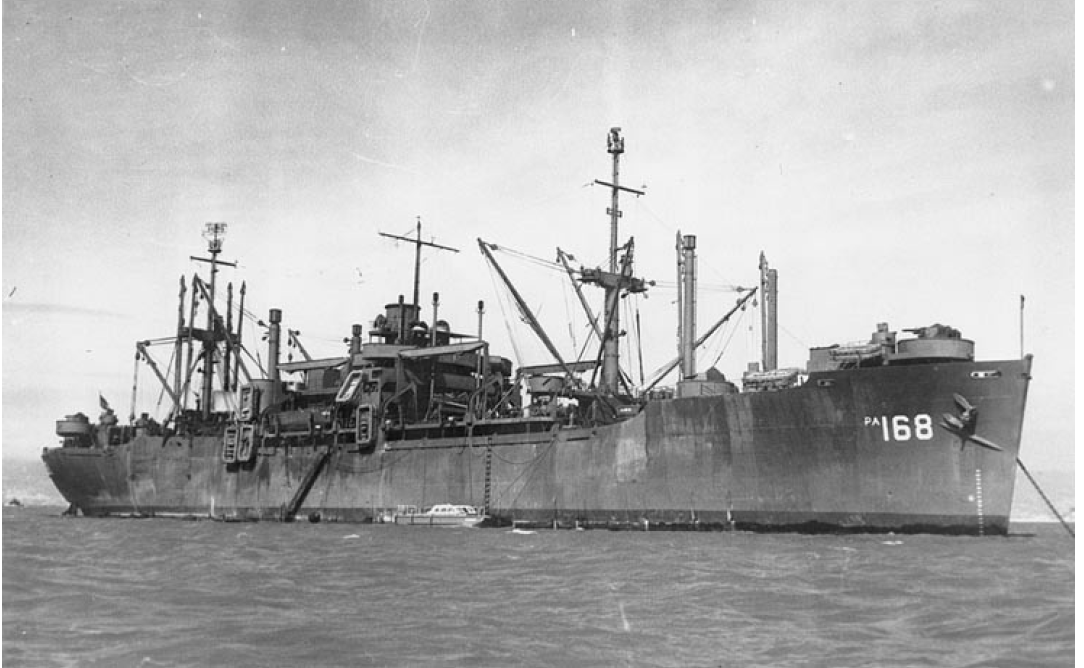
A Victory Ship - USS Gage
I can now admit that in one megagame I and another control umpire completely got this wrong for about 2 turns. We were running the western logistics board for the megagame the Last War, 1942 - 45. This mostly meant that we were running the Battle of the Atlantic. The rules were of course simple to adjudicate. However we did not know what to do with the delivered supplies.

Eventually our mistake contributed to the now infamous "rubber shortage scandal" of the game. With players saying "where's my rubber?", or "are you hoarding rubber?"

Here are the relevant rules:


  1. Check materials available via sea routes from naval Players. Note quantity shipped. This should be based on state of access at the END of previous turn.
  2. Check materials available by land routes on Land Map. Note quantity shipped. Collect Materials Counters from Control. This should be based on state of the routes at the END of last turn.
  3. Work out which Industrial Zones have their requisite materials by placing counters on the IC appropriate card.
  4. Hand over materials counters used this turn to Control.
  5. Collect output counters representing industrial output (Tanks/Man/Ships etc) from Control
  6. Distribute counters ‘manufactured’ to correct location on map (the location of the IZ) for use NEXT turn. 


Now I read it again, I can see why I was a little confused by this sequence. The goods shipped are in effect "manufactured" and should have been moved by someone in 6 - this was not spelt out.

The best way of smoothing these things out is to take the control team through the sequence in a test game and then for the control team to pass this knowledge on to their players during the game.

I still feel a little guilty about this. I know it effected the game as there was a big materials crisis that escalated upto the senior political players. When we realised the mistake we quickly recovered and we as control umpires went down to the relevant "land" table and delivered the goods at the end of turn.

Watch the Skies 2 - control team try out

The reason this has come to mind is that last night - 16 February - I participated in a megagame control team try out, and development session for the 300 player Watch the Skies 2 megagame. This was a very successful evening. Not only did we go through a couple of test turns, we also got to discuss rules changes and developments. This was great. It helped us all appreciate the turn sequences on the day that are sometimes implicit in the rules. For example, when the turn sequence calls for players to deploy their units, do they do this simultaneously or in sequence? These things can be spelt out in the rules, but often aren't and control have to resort to the old control motto of: if I don't know it is right, I can at least be consistent.

But the key thing for me was to establish what needed to be moved from table to table. These are the things that often go wrong. Watch the Skies 2 is going to be mostly a player led game, with the control team, monitoring, assisting and driving the game.

I will be one of the alien umpires. My players' tables will be kept away from the main "earth" tables. The Aliens are in effect in space or in orbits around earth. As each game turn will be about 3 months, the "human players" will be able to move about quite freely in comparison. What I wanted to establish was what will the Alien Players take to the table, get from the table and who will carry it.

I cannot go into too much detail, but it looks like this game's design has learnt from the earlier problems encountered in this tricky business of moving game information between tables in a multi-team game. From experience this is what can go horribly wrong in a megagame.

It's not just logistics

In the example I gave of the Last War and from our try out of Watch the Skies, I was most concerned about moving logistical resources between tables. The Aliens of course will have a resource allocation game too, and I will have this to monitor.

In some ways logistics are the obvious of inter-table bits of game information. But in the try out last night we had an example of how "intelligence" can be perhaps even more slippery as it moves between tables. I cannot go into detail at this stage. All I can say is that the Secret Agents deployed to the board can gather intelligence but the actual information they glean will be literally in the hands of another player or player team not located at the same table. I think we as control umpires have worked out a solution to this, but I know Jim and others did voice concerns that we are setting ourselves up for one of these inter-table movements of game information. Was the game effectiveness of this rule worth running the risk of failure?

I was interested to hear Jim say that one of his design concerns is to remove these inter-table hiccups by getting as much done on each table as was possible.

It might seem to be a small thing, but when you have 300 players and 45 control umpires and about 10 map tables things can easily go missing.


Popular posts